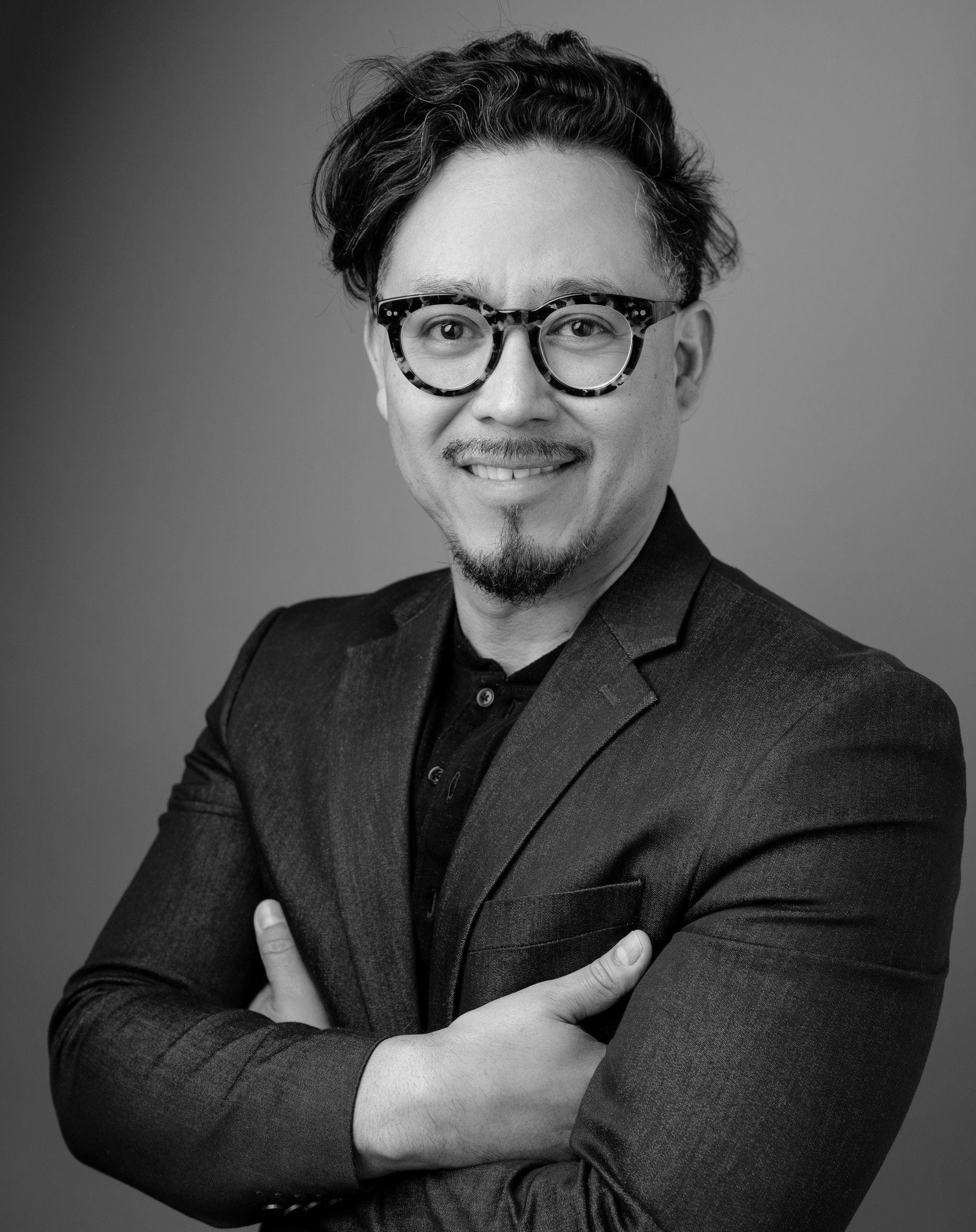
APR: Octavio, although you published your first collection in 2014, it feels like you’ve really broken into the spotlight more recently. We always ask the question; why poetry? In your case, why poetry and art? Is this something that you’ve historically always been interested in, or did you come to it gradually? What were you doing before you began devoting yourself to poetry and art and Frontextos – (visual poems) that led up to becoming more mainstream? We ask this because it’s fascinating to understand the momentum and journey to this point, as much as this point and the future.
It’s always been stories. Story-telling, the oral tradition. As a boy, I loved listening to the men and women who raised me. Be it my maternal grandfather who was a great story-teller, or my insomniac neighbor who’d wake me up, when I was a teen, in the middle of the night, high as hell, to talk. I found beauty in words. In beginnings and endings, punchlines and midnight mumblings. And I grew up reading, so I think that also had something to do with why I chose writing, which later turned into writing poetry. And reading Mexican graphic novels as a boy probably had something to do with why I love visual art. Honestly, I can’t say for sure. Maybe I was born with the desire to be creative. I mean, when you’re a kid growing up without a cell phone, you spend a lot of time alone outside of the house, and what else is there to do but to make up stories to entertain yourself. After a while, you start liking being the hero in those stories. And somewhere along the way, you want to write them down. And you do. I started by wanting to write fiction, for instance. And I wrote an awful novel when I was 22. But I kept coming back to poetry. And then things just happen. You start breaking your thoughts and emotions into lines. And you feel that the world inside of you makes less sense, but somehow it also begins to make more sense just by that metaphor you write. So here we are, writing books and making art. And for me there has never been a “what were you doing before you began devoting yourself to poetry and art.” Truth is, I have always been writing and making creative stuff, even while working shitty jobs. Doing creative things, since childhood, has been a major reason why I am still around, relatively sane, in this world.
APR: Do you find as a Mexican poet living in America with a huge body of work, respect and education behind you, that you still encounter prejudice in miniature or overt ways? In other words, what is your experience as a highly accomplished academic, artist, poet and creative, in the confines of Texas? And conversely, what are the positives you’ve encountered?
For me everything is a positive, even the “prejudice in miniature or overt ways” I experience. As a writer, this is part of my education. To engage with people. To be diplomatic. To listen to what is said and, perhaps more importantly, to pay attention to what is not being said when I chat with people. Thing is, I really don’t come to a conversation defensively. I am who I am and that’s it. I know where I have been and I generally know where I am going. Is there prejudice in the world? Sure. Is there racism, classism, misogyny, etc? Yes, there is. Here in Texas too. But I love Texas. As the 2025 Poet Laureate of this State, I got to meet wonderful people from all backgrounds, and I got to talk to them, and I got to listen to them, and they gave me the time and space to do the same, and I can attest that there is more love in this State than there is hate.
APR: In your poem “New Country,” you speak for so many different immigrant experiences and portray the commonality in these:
Your new country a wild dog / your new country a wild church / your new country bucket of bleach water dumped in the street / your new country ask for permission, motherfucker / your new country blind tongue / your new country drag me to a tree to hang / your new country burning wick / your new country crooked vocabulary / your new country no se habla español / Your new country show me your papers / your new country I ain’t got no fucking papers
Some would argue, as we see in the news, that if an immigrant has anything negative to say about America, they shouldn’t say it, they should turn around and ‘go home.’ There this idea that speaking out in any way about anything as an immigrant, disqualifies you from living in America, or that it’s assumed to mean you don’t want to be here, nobody really knows but those thoughts are shared by many who feel immigrants are the ‘problem.’ Having also experienced this in different ways, I felt “New Country” worked on multiple levels, not least it’s simple message and mockery of prejudice. Do you think the only rebuttal to such prejudices is to mock them through laying them bare?
I don’t think mockery is the only rebuttal, though it could be effective. Although I try not to explicate my own work, in the case of this poem, a line like “your new country ask for permission, motherfucker” is dark, humorous and unsettling because it exposes the contradiction between this country’s ideals of freedom and what seems to be the demand for unquestioning obedience. This poem speaks to that, I think, and more than anything to how immigrants are often expected to erase parts of themselves while simultaneously being denied full belonging. I mean, it happened to me when I first came to the States as a kid going into third grade. Linguistic erasure, I mean. The teacher said, “I am going to speak to you in Spanish only this time. Aprende inglés lo antes posible, porque todas las clases serán en inglés.” A year later, I had forgotten most of the formal Spanish I had learned in school in Mexico and I was speaking broken English.
APR: If you had to make a distinction between, say, writers who write in English as a second language and often code-switch and use their bilingualism as an intrinsic part of their formula and expression, versus those solo-language writers, what would the distinction be?
I could be wrong, but I really don’t think there is a hierarchy between multilingual and monolingual writers. I think they simply have different relationships to language. A monolingual writer, for instance, can explore incredible depth within a single linguistic tradition, while a multilingual writer can often illuminate the spaces between traditions. In my case, I don’t limit myself. I write in English and I write in Spanish. And I code-switch in both languages when the work calls for it. I wrote my book, Las Horas Imposibles / The Impossible Hours (University of Arizona Press) completely in Spanish. And then, it was translated into English. Which is another way of thinking about language. Overall, I think both approaches enlarge literature. And as a multilingual writer, I am aware that language is never singular, that identity, memory, and meaning are always more expansive than the boundaries of any one vocabulary.
APR: In your poem Never Been to El Paso, TX, it was hard at times to know if you were using El Paso as a reference to assumptive thinking, or a parody of prejudice or more about something personal that you utilize the notion of never having been to that border town, to reflect connected emotions within the poem, like the lines:
Like the womb
I draw with my awful
Longing black
Between two lines
Of a notebook
Where I have glued
A strand of your hair
Black every time
How I read it, was to imagine someone (you) having lost (someone) and the use of El Paso as a border between (gain/loss) but also the unknown of having never been and the assumption from most people, that you would have, as a border town within poetry for loss and grief. I might be completely wrong, which is the best thing about poetry, that the readers themselves can build universes from their interpretations, even if they’re not at all what you meant. I personally like it when people misunderstand what I’ve written because I recognize that I don’t own interpretation. What are your thoughts on this? And please do tell us your own story behind this incredibly powerful piece of writing!
I am the sort of writer who prefers for the reader to make up their own mind about what a poem means. A poem, like all art, gives more pleasure when it allows possibilities for interpretation. And if I tell you what I think it means, it might kill that pleasure. And honestly, what I think it means doesn’t really matter. I mean, what fun is it for the reader for me to say what I think the poem means from the get-go? As the title of the poem says, I have never been to El Paso, TX, and so I created a character to address in my imaginary journey to that city and the poem was born. I am glad you liked it!
APR: This is an odd question, but it hasn’t escaped our notice that you are brilliant at promotion, be it yourself or others. You have a natural ability to harness social media as well as being very sociable and attending many in-person events. Do you feel that your extrovert-side is helpful in gaining you traction and respect within the poetry and art communities in Texas? Is this an essential component of forging a path in your chosen subjects?
Thing is, I’m not really trying to do much with social media. In fact, I intentionally limit my time on it. I post what I need to post for the day, and then I move on. Maybe I’ll check back later to read messages or see what’s happening, but that’s about it. For me, social media has very little to do with promotion because I mostly think of it as documentation, a record of the work, the process, and the conversations I’m fortunate to have with writers, artists, and readers. It’s less about building a brand than about creating an archive of a life in literature. You describe my approach to social media as “brilliant,” but I suspect that if I were consciously trying to promote myself, it would probably lose whatever quality you’re responding to. I’ve always been drawn to the idea of don’t try. Not in the sense of being passive, but in the sense of not forcing things. I simply do the work and if something meaningful comes from it, great. If not, that’s fine, too. I think that the work itself has to be enough. And for me it is. A good example of this way of doing things is “The Great Texas Poetry Project,” a collaboration that the 2026 Texas Poet Laureate, Kevin Prufer, and I recently launched. We share videos of Texas poets reading their work on Instagram, and it’s been a joy. The funny thing is that Kevin and I first talked about the idea a year earlier, when I was named the 2025 Texas Poet Laureate. We easily could have started it then, but neither of us felt the need to rush it. That’s important to me. I like projects to emerge organically, to arrive when they’re ready rather than because I’ve decided they need to exist on a particular timeline. I’ve found that the work has a way of telling you when it’s time. My job is simply to pay attention and be ready when it does. By the way, allow me to invite your readers to send us a video @thegreattexaspoetryproject on Instagram. Thanks!
Two poems by Octavio Quintanilla:
Strong Bond
Sometimes, weeks go by, and I don’t call my mother. Sometimes a month goes by and a sign on the side of the road reminds me to call her. Sometimes the surface of my mind forgets she lives, that she still exists in this world.
My siblings probably think of me as heartless, un ingrato, an ingrate. But when my mother came to this country, I was already a man. I didn’t need her as much as my younger brothers needed her. They still visit her, call her, make her feel loved.
If my mother were a country, she would be the one I leave behind in search of a better life.
Leaving
Quiet the hills.
The does along the edges of their skirts.
Doe heads turning with knowledge.
Their bodies sifting light.
The grass in their eyes giving birth to a boy.
The boy with a dock of black hair.
The boy with a sea for a mouth.
The boy with a storm between his legs.
Quiet the hills.
The clouds brushing against their heads.
Their heads nipping the rain.
The boy becoming a man.
The man becoming a city.
The city becoming a funeral.
And all sound felt in the hips.
Felt in gristle.
Felt in the empty skull.
I am fragile, the man says.
Go easy into my sternum.
Poke easy to touch my blood.
Go ahead. Grow quiet.
Find me by the gate.
Underneath the torn gown
of this night.
BIO
2025 Texas Poet Laureate, Octavio Quintanilla has authored three poetry collections: If I Go Missing (Slough Press, 2014); The Book of Wounded Sparrows (Texas Review Press, 2024), longlisted for the National Book Award, The Juan Felipe Herrera Best Poetry Book Award Finalist, International Latino Book Awards Finalist, Texas Institute of Letters; Burdine C. Johnson Award for Best Book of Poetry Honor-Winner, and a 2026 Finalist for the Kingsley Tufts Poetry Award; and, Las Horas Imposibles / The Impossible Hours (University of Arizona Press 2025), winner of the 2024 Ambroggio Prize of the Academy of American Poets and the 2026 winner of the Burdine C. Johnson Award for Best Book of Poetry from the Texas Institute of Letters.
Octavio’s Frontextos (visual poems) have been published and exhibited widely, including in the Mexican Cultural Institute in San Antonio, El Paso Museum of Art, Centro de Artes in San Antonio, The University of Texas Rio Grande Valley as part of their “Distinguished Artist Series,” Southwest School of Art, Presa House Gallery, Brownsville Museum of Fine Art, and in the Emma S. Barrientos Mexican American Cultural Center / Black Box Theater in Austin, TX. His poetry and Frontextos can be found in public spaces such as at the San Antonio Labor Plaza and at Poet’s Pointe.
Octavio is also the recipient of the Nebrija Creadores Scholarship which allowed him a month-long residency at the Instituto Franklin at Alcalá University in Alcalá de Henares, Spain. He holds a Ph.D. from the University of North Texas and teaches at Our Lady of the Lake University in San Antonio, Texas. He is the founder and director of the literature & arts festival, VersoFrontera and publisher of Alabrava Press. He was recently inducted into the Texas Institute of Letters.
Website: https://www.octavioquintanilla.com/
IG: @writeroctavioquintanilla & @thegreattexaspoetryproject
Twitter: @OctQuintanill