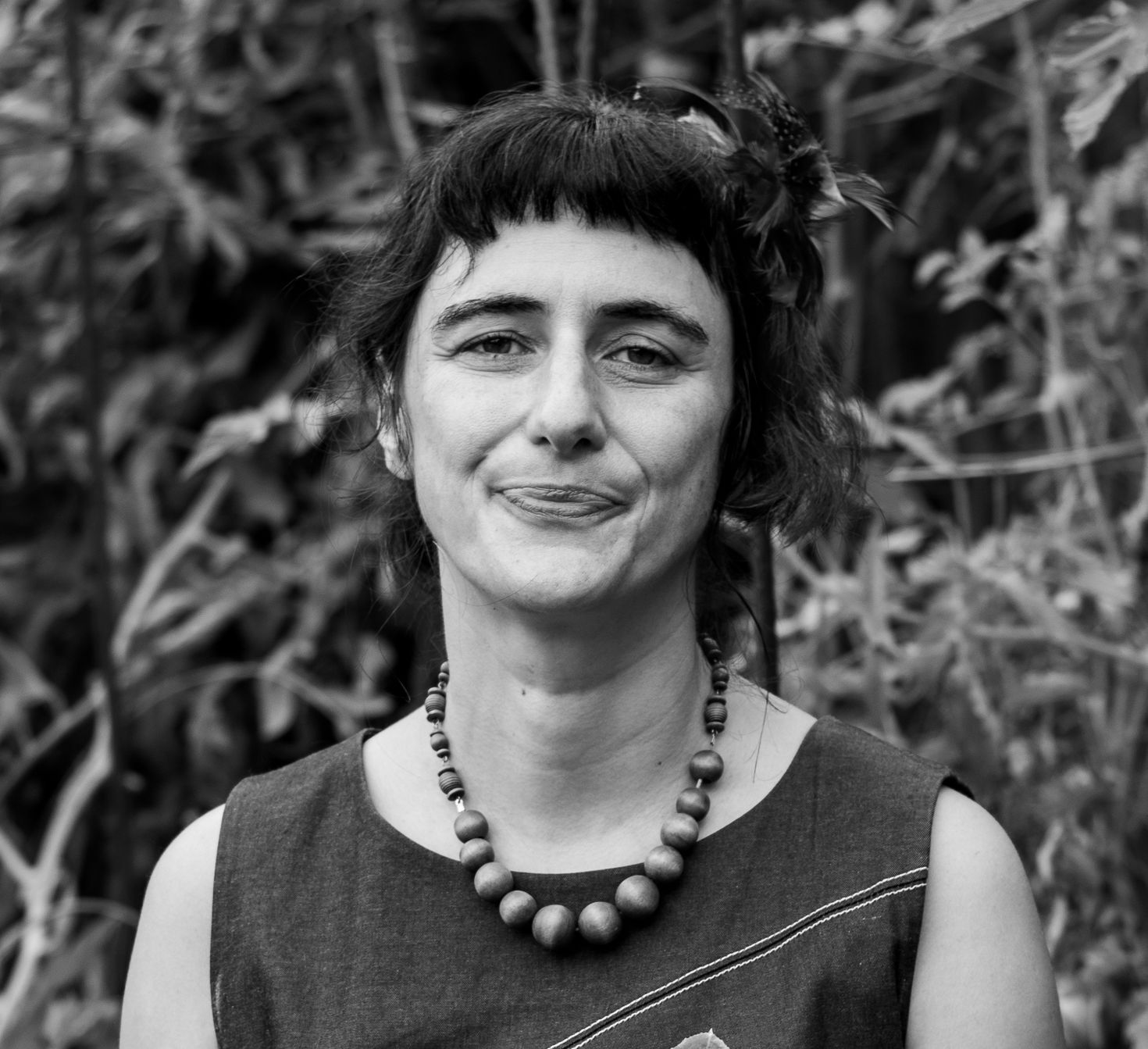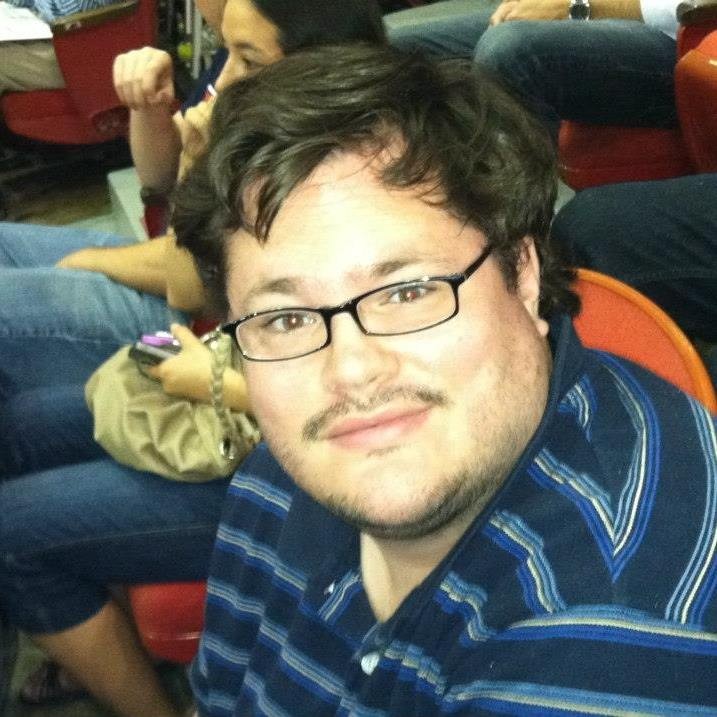
CLD: Dustin. Your advocacy and own work in the poetry world, as well as publishing and writing in general, is long established. You began as the Owner, Editor of Transcendent Zero Press, nearly 13 years ago, as well as Editor-in-Chief of Harbinger Asylum. Curator of the open mic ‘NOKturne First Monday Reading Series’ and curator of ‘Fourth Tuesday’ readings at Barnes and Noble (Houston, TX). Recently you were a key speaker at ‘Golden Armor: The Soul’s Shield,’ an event hosted by the Comparative Literature Department of Harvard University to discuss the poetry collection ‘Golden Armor’ by Armenida Qyqja. Did that feel like the culmination of something for you? What was the premise of this event in relation to poetry and your writing?
DDP: The event at Harvard University was to celebrate Armenida Qyqja’s extraordinary poetry collection Golden Armor. The quality of this book is the par excellence of what my company seeks to promote in literary publishing. Armenida was referred to me by a friend, Ermira Mitre, who helped me with an anthology of Albanian poetry in English translation. As a humanist, I take interest in global culture and how it impacts events. Armenida is an Albanian-Canadian who informs me that due to totalitarian communists, her country is bleeding citizens. They are leaving to secure their freedom and prosperity. The anthology I curated years ago, ‘The New Condemned,’ with your assistance in editing, sought to explore the original poetic impulse of the nation under the repressions it faces.
Considering such a state in Albania, a people with a long history of creative and political contributions, this seemed a perfect way to explore how human freedom is necessary for culture to develop. Armenida’s poetry often focuses on human rights, genocide, and cultural exploration through the lens of longing. Her ability to balance emotional independence with historical observation is the essence of poetic achievement.
‘Golden Armor: The Soul’s Shield’ was a broad discussion of her book. It invited friends and even Armenida’s teacher from youth to speak for the book and its value as literature. My speech explored current political developments that impact our understanding(s) of ‘freedoms’ in relation to oppressive regimes, to include the current US administration’s efforts to re-write history to suit their ideology. We also discussed how contemporary music has lost its higher aesthetic content in favor of vulgar honesty, a subject in some of ‘Golden Armor’s’ poetry. While this speech at Harvard felt like a high achievement, I think there is much ahead and my responsibility I feel, is to be an ethical publisher who seeks to promote otherwise ignored voices in poetry and literature that need to be heard.
CLD: Your social advocacy is long-standing and evidenced in many of the poets you’ve published and promoted. In your own poem ‘So Far Away’ you describe yourself as: “an epic hero, myself: degenerate lamb of poems. / Distant from the soul which I am tasked to redeem,” I read this as having some pride in what you’re capable of, whilst being sacrificial in some form? And removed from your own self-redemption? Elaborate on this for us.
DDP: Literature offers a great sacrifice because it does not profit the artist much on average, especially in today’s world where technology has exiled the literary persona. This poem reflects on the difficulty of self-honesty, hence the line “distant from the soul which I am tasked to redeem.” The literary persona is a victim of itself in a way– in pursuing the art of knowledge it becomes almost a nihilist because the world has no objective knowledge per se, being as messy and incoherent as it is. Simultaneously, this persona is expected to create value and understanding, to contribute to the cultural base that nurtures it. It becomes an offering because it must invigorate an understanding it cannot fathom itself.
This paradox of maintaining culture and furthering it not only pressures the artistic pursuit, it adds despair to the artist’s life. There is an overwhelming political divide in the US currently that is primarily an issue because both sides of this agenda of building this country seek to repress the other. This dynamic impedes discussion and leads to political figures as divisive as Trump seizing the moment to enhance their agenda. When the citizen body is unable to freely resolve issues through responsible deliberation, demagogues emerge. I think this issue is primarily one of collective consciousness which can be addressed in literary and other artistic expressions. Art universally heals and establishes connections. While I myself am a political liberal, my pursuit for greater understanding of the world led me through art to connect with others who have the opposite view.
Art is not primarily a political tool, but its cultural sanctification is due to its healing potentiality and ability to bridge across divides. I think the Left made many mistakes in trying to impose a political agenda through art and aesthetic criticism. This shut out well intentioned conservatives from the public dialogue, leading to what we have now. An angry populace that voted to bully those who used collective power to bully them. That said, I hold no sympathy for this administration either, and am skeptical of political power generally, while viewing it as necessary for a secure and healthy society. For me, literature and art provides a space for humans to be imperfect in their wisdom and expression. It is the only space where emotional integrity is honored.
I take a Jungian approach to art, and view the great artist as a martyr. In fact, as a teenager I used to say, “You cannot spell martyr without art.”
CLD: You’ve mentioned how you consciously choose to direct language in order to make a particular point or arouse specific feelings. Perhaps its accurate to say many poets consciously do this to some degree? Or do you think poets are often unawares of this process, and maybe even neglectful of it? For example in your featured poem ‘Sublime Lust’ you write: “I cannot see beyond who you are. / Your legs spread before me in the darkest possible heat.” Whilst you could read that literally, I also read it as metaphor, whereby the universal ‘I’ cannot see beyond another person’s limitations of themselves, despite the apparent surrender. Talk about what’s behind this poem, the crux and depth of its intensity?
DDP: This poem explores how physicality interrupts human relationships. This almost gnostic view that the physical world obstructs love, is based on my frustrations with materialism as a philosophical understanding. I am equally agitated by the escapist spiritualism that posits a reality above our own that we cannot access or understand. We are left with remnants of a world that we find insufficient. The growing complexity of this reality as we add to its history, frequently is ahead of our ability to comprehend it. So we feel like it is incomplete. The old Einstein adage about our technology exceeding our humanity, reflects this paradox.
The title ‘Sublime Lust’ is both a recognition that the physical aspects of relationships are necessary and fruitful and a criticism of a strict physical view. Recognizing another person’s emotional realities adds depth to our experiences, yet we are limited in understanding another person’s emotions because we are not them. We can share an experience while not commandeering it. The line you cited from the poem presents this reality that certain experiences are private to the person and we cannot fully grasp realities outside of our own. We really don’t completely understand our own experiences and thus, spend lifetimes sorting out what reality has offered us. The poem wants to reconcile this thought to submerging oneself in a person that one deeply loves. Freud notes in Civilization and Its Discontents that “At the height of being in love the boundary between ego and object threatens to melt away. Against all the evidence of his senses, a man who is in love declares that ‘I’ and ‘you’ are one, and is prepared to behave as if it were a fact.”
CLD: Oscar Wilde said “All bad poetry springs from genuine feeling” and felt it was more realistic to avoid overt morality, noting, “To be natural is to be obvious, and to be obvious is to be inartistic.” He believed poets may live the poetry they can’t write and inferior poets may create the verse they can’t live. It’s a tension between lived experience and artistic creation. You’ve been quite candid about the overall trajectory of your publishing career and some of the obstacles faced in continuing. You’ve been quoted as saying: “(these) things that unsettle me enough that I feel compelled to create from them.” How do you find adversity can be channeled into creation and does it add to or take away from that process? When you write, do you channel that anger or disappointment? Your writing style is varied, but you seem to return to classical poetry more often than not, with such an obvious love of language, to include the more epic forms of describing the world. Is this a form of escapism or idealism? When you wrote the poem ‘Who is Lucifer?’ Was that part of an attempt to understand evil? I also observe this in your poem ‘The Stake’ in the lines: “The stake is always our witness.” Does this speak also to our need to uncover evil and punish it?
DDP: I am constantly facing adversarial emotions and thoughts. I sense that every country and culture wants to insulate itself from criticism, especially where power releases its paradoxical energies. Our political elites contribute to this with their trickle-down instinct to shield insights concerning their mistakes and hypocrisy. I think this instinctual repulsion to recognizing the devil in oneself, hinders growth and dialogue.
Academic and poet Dr. Jhilam Chattaraj described my poetry in an Ethos Literary Journal interview; “I have found a poignant echo of the Romantics and Eastern religion peppered with a monkish and child-like curiosity.” My poetry over so many years of writing books has shifted and developed its concerns and approaches, embracing a fluidity because of this natural curiosity noted by Jhilam. In this same interview I discuss my interest in nothingness, quantum physics, and natural law. At root, my poetry is a process of discovery. I naturally seek stimulation in new ideas and need such to satisfy my sensibilities. While the collection ‘Salt and Sorrow,’ kicked off my international reputation, its Christian humanist worldview is only part of my thought process. I have written tributes to celebrities ranging from Dolores O’Riordan and Daniel Johnston, to Charles Manson through the imprint Alien Buddha Press, highlighting my interest in exploring personalities.
‘The Stone and the Square’ was written during the vast power outage in Texas years ago when the freezing temperatures killed our power grid. It was written in the dark with my phone light as power in the winter cold. This book also has the backstory of being dedicated to an online presence who at the time promised marriage to me. It turned out to be a romance scam, where the verse maintains its vigor and emotional impact even if the relationship was fraudulent. My ekphrastic book ‘Frenetic/No Contest,’ was based on the art and photography of Alien Buddha Press’s Editor-in-Chief, Red Focks. I chose particular poetic forms and wrote a series of poems on each piece of his, following those forms. This collection was an early publication for Alien Buddha Press, a thriving independent publisher today.
‘The ‘Ophelia’ Prophecies,’ was picked up by Bill DeVault’s company Venetian Spider Press, after I sent him the manuscript for editorial advice. The concept of the book treated Shakespeare’s Hamlet as a springboard to explore human conceit and denial about pertinent issues including climate and the economy. The poems were compiled during a period of romantic failure following the romance scam. A woman online I was friends with courted my affections after the scammer was uncovered, only to then manipulate and discard me callously.
‘The Alderman: spurious conversations with Jim Morrison,’ channeled imagery from his underappreciated verse into my own original creations. The opening note presents the idea of the poet being a mutant with the DNA fabric of the universe. This mutation is an experimental process that enlarges the scope of human existence. My first collection was published through Transcendent Zero Press. It was called ‘The Daunting Ephemeral.’ Being an early publication, it does not have a unified idea but is rather, a compilation of poems I wrote over several years. That book was followed by ‘The Future of Poetry is NOW: bones picking at death’s howl,’ the first part of a notebook I wrote in two weeks following my birthday that year. I intended to release two more books in that series to publish the entire notebook, but never did.
Heath Brougher told me I must have been “in the zone” because the poetry was so impressive to him. I also wrote ‘Only and Again,’ a book revolving around the concepts of eternal recurrence and nihilist metaphysics. It is also a tribute to three beautiful and inspiring poets: Lisa Marie Basile, Anna Suarez, and Monica Lewis. These women are the beneficial muses of the book. The collection was criticized for sexualizing real life women under the guise of philosophical inquiry by one editor, although the poems don’t objectify the ‘muses’ at all. In fact, all three of the women approved of my poems and were flattered I was inspired to write about them. Speaking of Lisa Marie Basile, one edition of Harbinger Asylum (our now defunct literary magazine) has a review I wrote of her book ‘Andalucia.’ I consider this book of hers a masterpiece and she told me she has kept the review on her computer because she appreciated my views so much. My collection ‘Knows No End’ was an exploration of aesthetics and what compels artistic creation. It is a story of a lone painter who discovers a beautiful hyacinth flower and chooses to paint it. The painter was modeled after my friend tbe cosplay model and painter Vera Ikon, and is in fact dedicated to her. The sorrows and difficulties of seeking beauty through human art are illuminated and explored in this collection.
Through poetry, I can be ambiguous and balance my perceptions with impersonal content from the world around me. While recognizing that my perception of life is limited and constrained by what I know, I invite emotional realities that are beyond my own apprehension. As a liberal-minded person, I feel the need to accept that others are not like me and do not have to be. I am also appalled at the level of bigotry and conceit coming from so many of my fellow humans. Because contemporary American society decided it wants to pursue a direction of isolation and chauvinism, I am surrounded by others who make a virtue of being small-minded. A worthy example of this; if the current attacks on Iran’s Islamic regime were to liberate the Iranian people from theocratic repression, why is current policy also aimed at restricting Muslims from entering the country? And if they already live here, blaming them for ‘Islamization’ of a largely Christian America? Obviously those cheering for Iranian freedom do not fully appreciate Muslims, so why are they excited for the idea of liberating a Muslim-dominant country? The same people demand I take pride in American/Western civilization, yet when I say I appreciate the diversity of this country, they are righteously offended. So this pride they want me to have, is limited to their ideology, ergo we return to the themes in my writing.
I feel very out of place in my own society because of my self-consciousness. Texas is largely conservative in attitude, celebrating a faux individualism and frontier spirit that is no longer compatible with our modern civilization. You are only perceived as truly valuable as a human, if you are financially independent and ‘successful’ fiscally. Do they not know how many of our founding fathers died in debt because of their own malfeasance or neglect? The purpose of any cultural or historical criticism is recognizing our humanity, not destroying it. While our founding fathers achieved greatness and beautiful things, they were like all of us, paradoxical people. Besides, must I prove my humanity by accumulating numbers in a bank rather than the experiences of depth and understanding? What is wrong with wanting a society that ensures equal rights to all people? As a legally disabled American of limited means, I am also relegated to a lower status by the expectations of ‘independence.’ This is another theme I return to repeatedly in my poetry, what we mean by sovereignty and selfhood.
Oddly, the people who advocate extreme individualism, often unchecked by moral principles or social responsibility, are the same people upset that ‘liberal’ additions to our culture are ruining it by encouraging narcissistic behavior and ‘woke’ agendas. So, corporations have the right to pollute our air and water? But I and others, do not have the right to our private lives and lifestyles, or our advocacy for others? Sorry, but Christian dogmatism will not ensure equal liberty, nor does disregarding pragmatic law create a safe, prosperous society. Once again, these themes are ones I repeatedly return to in my writing, as well as whom I choose to publish, seeking minds that think outside the dogma or status-quo, rather than the ‘standard’ which is careful not to offend.
Before conservatives jump on me for being unfair to their values, I recognize the limitations of liberalism as an ideology, but I deem it unfair to call moderate liberals ‘communists’ and ‘anti-American,’ yet simultaneously wanting ‘hate speech’ protected from political correctness, because it interferes in how we communicate. Neither side of this divide really wants to leave us alone and do what is right for all.
My overall worldview, which is reflected in my writing, is anarchistic– I’d prefer a world that does not have wealthy, powerful individuals telling us what is best for us when they are disconnected from our needs and rights already as well as a place where people can exist and live without impositions or judgement from shallow ideologies. Russian anarchist Kropotkin stated, “Love and hate; for only those who know how to hate know how to love. We keep this capacity; and as this alone serves to maintain and develop the moral sentiments in every animal society, so much the more will it be enough for the human race. We only ask one thing, to eliminate all that impedes the free development of these two feelings in the present society, all that perverts our judgment: –the State, the church, exploitation; judges, priests, governments, exploiters.”
CLD: TS Eliot is quoted as writing: “Poetry is not a turning loose of emotion, but an escape from emotion; it is not the expression of personality, but an escape from personality.” He wrote this in reaction to the excess of romanticism. Many times you write in a classical manner, would you concur or disagree with Eliot’s appraisal? You’ve mentioned how your relationship to and perception of the world has changed with time and how these changes have affected your creative output? What are the limits to poetry in your experience? Are there any enduring totems in poetry that pull you back in? You’ve had a long and varied writing career thus far, which points in this career are you most proud of and find the most encouraging? Do you see the poetry world shifting in what it has an appetite for? And what about you? What whets your whistle these days in terms of modern poetry?
DDP: I am currently reading David Rigsbee’s ‘Watchman in the Knife Factory.’ This book stuns me with its subtle philosophical approach. Rigsbee often invokes an aphoristic approach to revealing the underlying thought in his poems. While each poem is describing his observations of art, nature, and humanity, he has a way of challenging the poem(s) to also discuss the nature of language. His voice is contemporary and mature.
As far as Eliot’s comments, any remark that universalizes an experience is limited to the person speaking it. However, I generally agree with his statement. Poetic achievement must maintain some dignity of expression– sentimentalism and its excesses, overcome a lot of poems. There is a kind of navel-gazing approach to the common culture of writing. Most people want to share experiences and impressions rather than dig into the pulp of the matter. Also, language is the heart of poetry and its distillation is the root of its sublimity. My book ‘The Nothing Epistle,’ from which you culled ‘Sublime Lust’ was an attempt to transcend the limitations of language by anarchically allowing it to contradict itself, destroy itself, limit itself freely, and release itself from having to ‘mean’ anything. However, I did restrain these impulses with conceptual undercurrents. I was not consciously attempting to ‘say’ anything; but letting the raw emotion predict its own structure.
Where is poetry going now? Lately, the art world is screaming political activism at everyone and anyone who criticizes this is falsely deemed too ‘conservative.’ When art becomes a tool, rather than an exploration, it succumbs to the forces of power it strives to criticize and limit. As Nietzsche noted, in fighting monsters take care not to become one. Art’s relationship to exposing injustice and hubris should not be restrained by ideology. A lot of this de-Westernization in academia that presents the Leftist slant, is not only ineffective in remedying social ills, it seems to be encouraging the resistance and oddly empowering it. The Trump effect seems to be moderating this impulse, although this malignant narcissist is only a face of the national temperament. As it affects art, the intellectual spirit of the nation is crippled by the narrowness of impositions across ideological spectrums. Overall, the recent political developments have stressed me so much, I cannot free my mind to write. There is too much instability and uncertainty, too many things to be angry at, and too much finger-pointing and shouting because of the levels of extremism; too much platforming of dubious characters and lewd mischief; too much making heroes of malicious people; and finally not enough inspiration to account for anything. I am too sensitive a person to thrive under such pain and misery as is being inflicted upon us by each other right now.
Dustin Pickering’s Featured poems:
- Sublime Lust
I cull from your dreams, honey and dew, the satisfaction of knowing you.
I pull the heartstrings of my laughter.
These candles are lit with fervor from your nightly mirror.
Faces hide in the mountains of your body where stony rivers cultivate a garden.
I cannot see beyond who you are.
Your legs spread before me in the darkest possible heat.
I worship your curved splendor.
Thoughts are caged in my cranium where my ideal You is hidden like a tombstone.
Birds from the grave fly into the winterland of my soul where you hide the light.
I don’t see your face when I am lying with you at night.
I only see your glistening skin like a rabbit prone to the touch, quickened.
Black magic will keep your eyes awake.
Sing me the phantoms of your touch and think of me when I am resting.
Please do not give into the darkness.
Love me for the stillness of my repose.
Think doubly on the winters we left behind.
Hope is a tightly coiled snake of promise.
We keep each other warm in the flesh of beauty.
The lamplight will not fade your teardrops of my soul.
Hearts beating in unison with the world cannot be contradicted.
Your bashful eyes do not see me in the corner of oblivion where I love you most.
You are hiddenness of my yearnings, forever kept within.
The scent of you arouses my satisfaction.
I do not know why you are only for me.
The love I keep is the love I share.
Forbidden words are spoken to sponsor the midnight of our awakening,
If you know something I do not, do not tell me now.
Please wait until I am ready.
-from The Nothing Epistle, published by Virasat Arts Publication (2024)
- Who is Lucifer?
Someone must play devil’s advocate
when the trumpet blasts like a rune:
headache and temper follow through quicker
than the sweet heart of Creation;
though fallen, still able to bring itself up again.
Song, fill my house with adversarial glee,
let the toss’d angel overcome me:
I want the light in me to fasten its army,
and beat the choir of virtuous ones
into the pulpy ground.
-from Salt and Sorrow, published by Hawakal Publishers (2016)
- The Stake
Blessed poet, crass devil at your heels—
kissing your toes, hoodlum of the street.
His eyes, green as a gun underwater,
envious of any apparent thought of divines,
sifting the foam of the forgotten. Trek history.
We kill him like he killed Dostoevsky.
We burn him like Bruno,
his dying crisis one of empty eyes.
Joan of Arc arrests his privilege,
and Francis will seize the gray lies
in his lightning coat.
We will bury him with an evil fifth.
He tried. He will come again.
The stake is always our witness.
-from Fame’s Revolt, a tentative manuscript
Transcendent Zero Press website: www.transcendentzeropress.org
World Inkers Printing and Publishing website: www.worldinkers.com