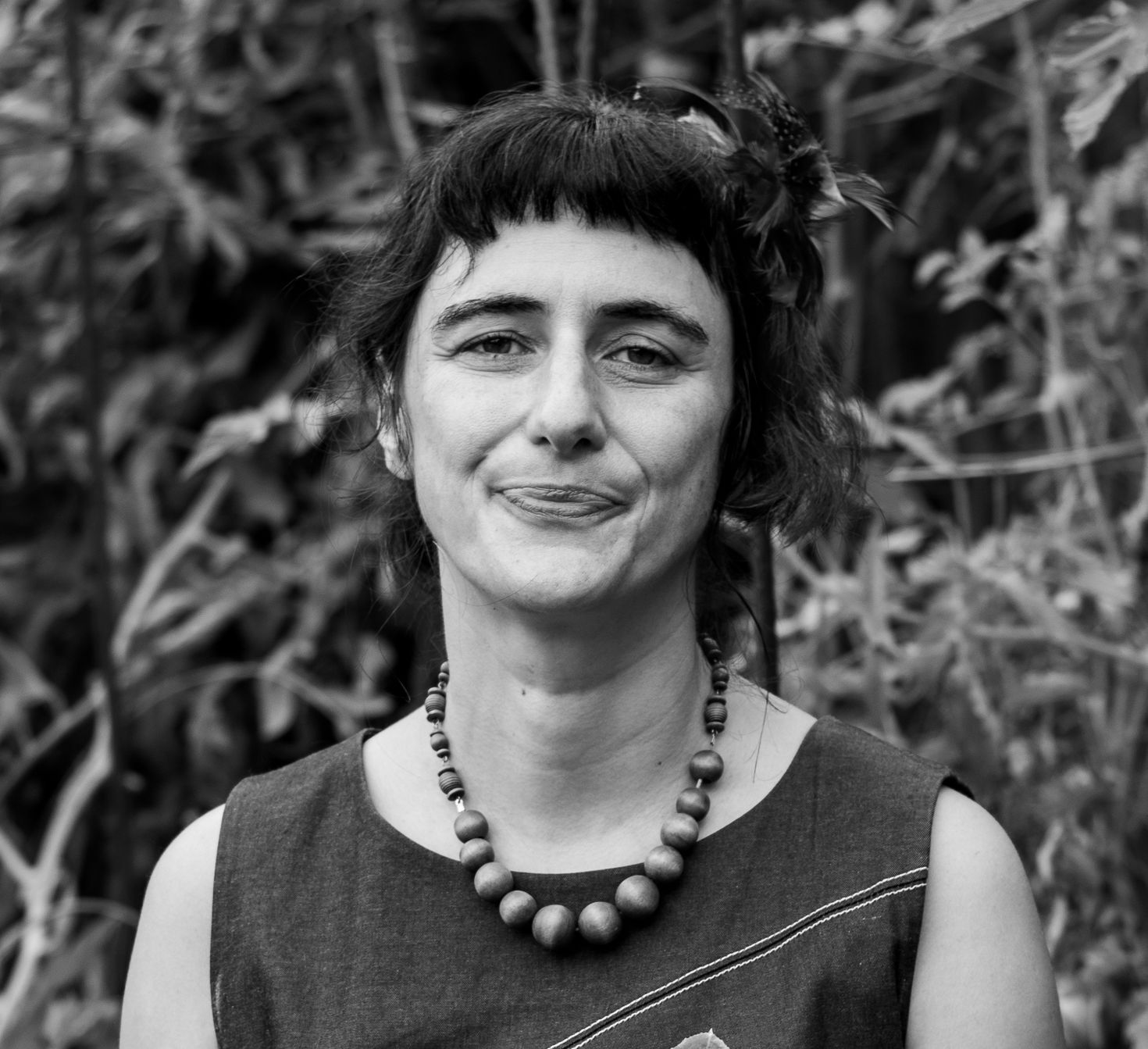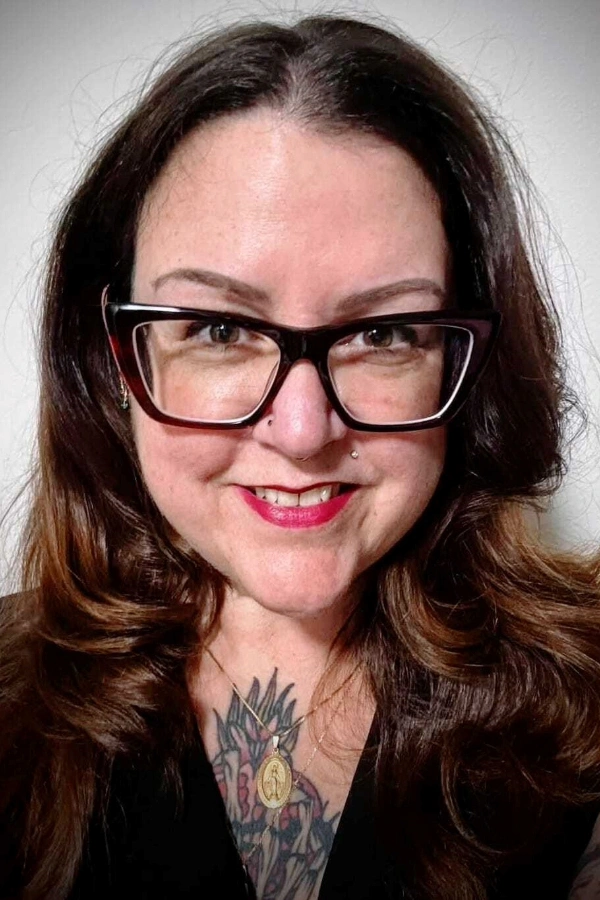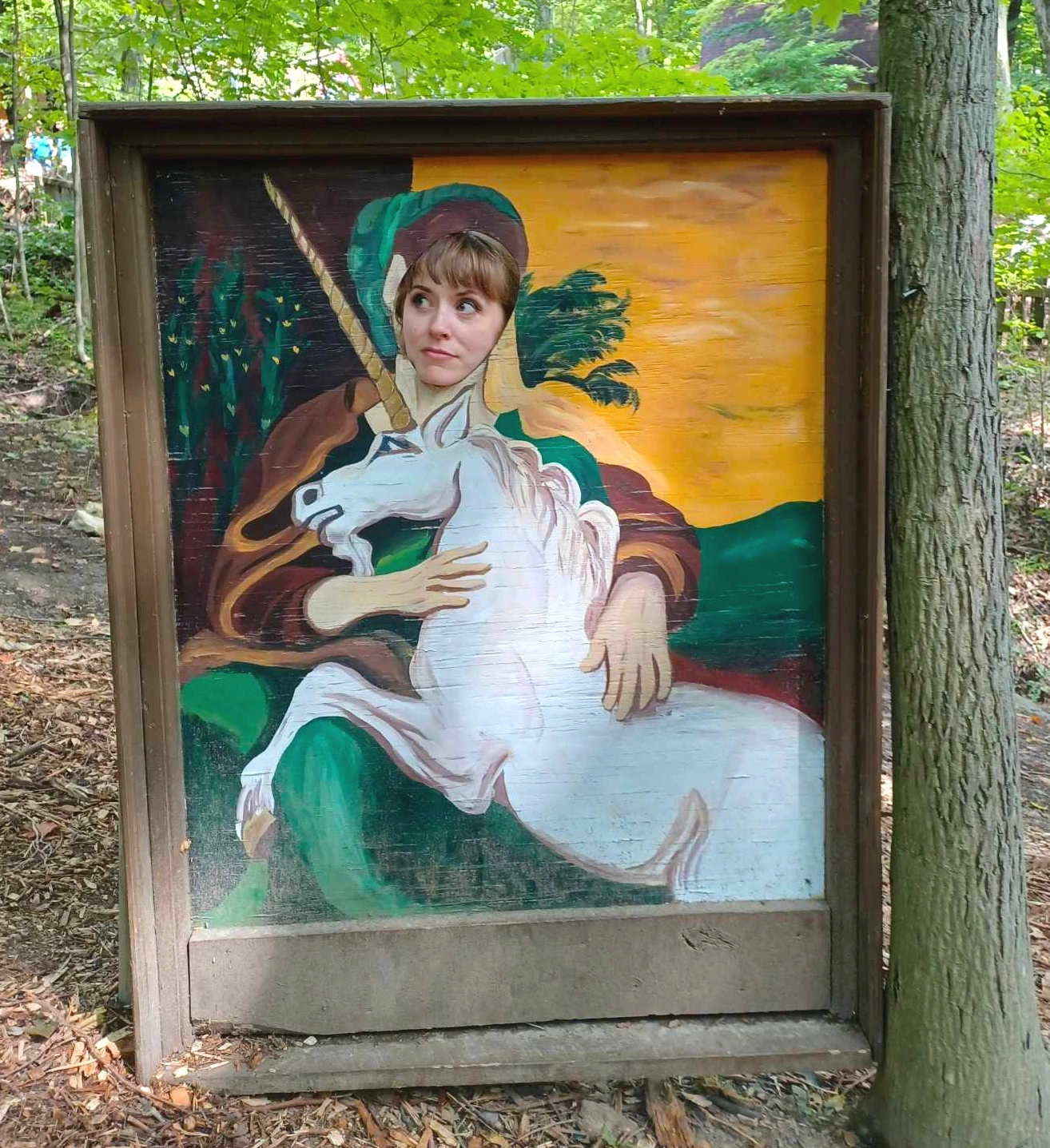

Olga’s collection ‘A Life Replaced: Poems with Translations from Anna Akhmatova & Vladimir Gandelsman,’ was published in 2019 by Poets & Traitors Press, an independent publisher of books of poetry and translations by a single author/translator. The press emerged from the Poet/ Translator Reading Series and from the New School’s Literary Translation Workshop to showcase authors who travel between writing and translation, artists for whom language is made manifest through languages and whose own word carries, shapes, and is shaped by that of another. Olga Livshin grew up in Ukraine and Russia, and came to the US as a teenager. Her poetry recently appears in Poetry magazine, the Southern Review, and Ploughshares, and is forthcoming from AGNI and CALYX. Livshin co-translated Today is a Different War by Lyudmyla Khersonska (Arrowsmith Press, 2023) and A Man Only Needs a Room by Vladimir Gandelsman (New Meridian Arts, 2022).
CLD: I discovered you simultaneously through Yetzirah and mutual writing projects and experienced a sympatico with your Jewish refugee immigration story. Then I read your work and it revealed the exquisite power of your multi-linguicism. From Odesa, Ukraine, and Moscow, Russia, you describe yourself as “a writer who helps others tell their stories.” Whilst yours is perhaps the most interesting of all. When writing ‘A Life Replaced’ did you want to share your story as much as those in translation, or was the purpose to reflect through emerging conversation, on greater themes than any one story?
OL: Translation is therapy to me—it’s one opportunity to bring my native languages and the stories I grew up with into close contact. A counterweight to assimilation, which is expected of us immigrants. Anna Akhmatova has always been looming over my world as a seminal figure. After Trump was elected for the first time in 2016, I wanted to understand what it was like for her to live through Stalin’s time and if there is anything we might learn. As I taught her work, I realized that there was a vulnerable person inside her, one who had deep regrets about the way her life turned out. So that was the big surprise, and it helped me like her more because of her humanity, and also helped me find my own voice; we are all just people, and do our best as we muddle through our time.
CLD: You talk of Anna Akhmatova thus, as being “painstakingly honest in facing her own vulnerability and desperation at such periods in history. The intensity with which she admits her fear and her defeat amaze me. Rather than paint our own attempts at resistance as heroic, Akhmatova can teach us a kind of lucid humility.” As a lesbian I found your essay on Akhmatova’s poem ‘Requiem,’ fascinating where you say it;
“captures the collective sorrows of Stalin’s terror from a position both personal and political. But a different Akhmatova exists as well: a delicate, erotically charged, bittersweet voice that is hyper-conscious of her romantic involvement with a woman.”
I can imagine the challenges for same-sex couples, I grew up with prejudice, but nothing on this scale. What about this subject draws you in?
OL: I am drawn to her as a fellow queer person and to her work as a brilliant woman. I would also say that I resonate with moments when personal lives intersect with huge historical changes. Best-laid plans… But historical catastrophes also bring out certain traits in us. As Akhmatova says in one of her poems, she wanted to travel and meet extraordinary people—what plenty of other people want. Having been confined to the boundaries of the Soviet Union, she became a weight voice for Soviet tragedy and a historian of her generation, a person who defended other poets against the Soviet state and a strong female voice, a role model for generations of women all over the world. To me, that’s the template: to live fully inside a tragic situation, finding words for what does not want to be named.
CLD: In the foreword for ‘A Life Replaced’ Ilya Kaminsky called it “Haunted by exile, longing for linkages between past and present…” What part does memory (personal and collective) play in this book and your work in general? Kaminsky finds childhood comes alive, at times through the irony of exile, is it also an elegy for something lost?
OL: My book has berries and mushrooms, and tall phlox, and a beloved Odesa poet tearing through all these garden plants on his way to sit with us and theorize culture. No doubt, I idealize my childhood. That said, yes, absolutely, we immigrants go about our lives in English and conform to the American expectation for assimilation, and silently, somewhere deep inside, a child is speaking in a different language, about past scents and tastes. A lushness that is somewhere else. All this loss and longing. It felt liberating to speak my truth, especially while xenophobia was on the rise. Since a few years passed since the publication of A Life Replaced, I feel like I have also gained something unexpected, revisiting my childhood and reframing it as Ukrainian. I started to translate Ukrainian poets. The war in Ukraine had been going on since 2014. A few years into it, I found myself translating poems for Oksana Maksymchuk and Max Rosochinsky, who were putting together the first anthology of Ukrainian war poems in English. I realized there is brilliant poetry being written in Ukraine, and so much of it is urgent, raw, and gorgeous. I only knew Russian growing up, but I wanted to read more. So I began learning Ukrainian, and now I am translating my poems into it and I see how Ukrainian my upbringing was. It had so much humor, lowbrow and sarcastic. My family held our garden in respect and took tender care of it—that’s a Ukrainian trait, an enormous connection to the land. My father, who was a writer, loved challenging Soviet authority… So the past started to shine in all these fascinating ways.
CLD: You go on to say: “Gandelsman was forty-two when he came to the U.S., the same age as my mother when she arrived. For an adult steeped in his original culture—and a representative of that culture—it can be extremely hard to adapt. Gandelsman’s speaker cannot identify with the American cultural landscape. What he does, instead, is map a world of immigrant push-and-pull—of alienation and attraction to the new home.” Again, as an immigrant this rang very close to the bone. You go on to write: “Then we create our highly subjective English versions and display them to the world.” Do you believe as a translator and immigrant, that immigrant voices in translation in poetry, possess a particular quality that evokes this process most of all?
OL: There are many people in the US who write in a language other than English and are virtually unknown. I would like to see more poets acting as allies to those immigrant voices. Gandelsman has lived here for decades, reading Americans and translating Anglophone poetry widely—from Macbeth to Dr. Seuss—and still barely any Americans know him, because all his work is in Russian. He has a long series of poetry set in New York and other places in the United States, and it’s fraught with sadness and sense of being unneeded in the world. Here is an excerpt of a poem Andy Janco and I translated, one of his best poems on this topic:
It’s the feefty-feefty birdie
tweeting all alone at dawn.
It’s the elevator-riding,
lifeless yellow afternoon. [..]
That said, that kind of poetry is one part of Gandelsman’s work. A lot of his poetry is about all kinds of existential topics. It would be great if immigrants were not expected to sound like a cultural other but would be seen as fellow human beings, in literature as in life.
CLD: Within the first section ‘WHERE IT USED TO BE HOME ~ With Anna Akhmatova’ in your poem ‘TRANSLATING A LIFE’ you write:
It is summer everywhere, except war.
War, where it used to be home,
and now, war by government, here.
This applies now as much as then, and perhaps always. There is such gentle grief and recognition that you follow up in the gorgeous poem “CALL IT LONGING” where you say:
Patiently you grew worlds out of a
country.—You know how to be as soft and dreamlike as
apricots, and I am from you, first and last. No one can hurt
me now.
Somehow you can infuse both the (lost) former world of Russia with the (claimed) soul of your people in a way that is genuinely moving and achingly lovely. Are you aware that you write sadness in a way people are drawn to? This is not unheard of for Russian writers, there is precedent, but I do not believe you can ‘learn’ to write this way, it’s more of an inhabiting. What do you think?
OL: I am sure we can learn from others—that’s one of the richest parts about reading diverse and international literature. In the US, in 2026, I know many of us are feeling all kinds of pain and terror. Those forces rush through us and over us; they can feel new and raw and like something that has never taken shape before. So just feeling them can be overwhelming. That’s why it can feel good to recognize your suffering in someone, particularly in something as quiet and unobtrusive as a book of poems. It can feel good to know this has happened before and poets did not wither. They continued to do the work, some of which is simply acknowledging: this is it. We are here. On the other hand, Ukrainian poets have taught me something about the human capacity to feel hope and the existential need to fight for justice. That’s another pattern that can be helpful.
CLD: In terms of technique and approach, you talk of the Acmeist school, whose poets sought the highest point of expression, “whether meditating on fleeting moments or on major historical events.” Gandelsman is considered a post-Acmeist poet and you describe his work as (bringing): “an amazing clarity to moments of both delight and sorrow. His exquisite diction and surprising collages of words help us remember our own moments of heightened feeling.” When Akhmatova writes in ‘MEMORY’S VOICE’ (and you translate):
What is it that you see on the wall,
with a dull gaze, in the light of late dawn?
Here exists another example of beauty within sadness, but also the eternal question, what is there beyond us? In the section of the book ‘IN A STRANGE AMERICAN TOWN ~ With Vladimir Gandelsman’ you translate his untitled poem thus:
It’s made out of one soul, then
another, and that doubly azure-blue
silence—
that’s where Lazarus died twice.
Again, there is this resistance to (nothingness) that is hopeful but also sorrowful. Is this the process of bringing intensity to both joy and sorrow that is so Acmeist? Do you find
modern poets are able to continue this or have lost the ability?
OL: I would say that it’s a typical Russian cultural trait-–no joy without sadness. A consequence of Soviet trauma, too, for both of those poets. They’d had to live for decades without many reasons to feel hopeful. The feeling that something terrible is about to happen is never far. Even if it is part of the human condition, even in the US for Gandelsman, death is always there and always fearsome. So you find beauty in sadness, and sadness in beauty, and on and on. I think one thing the ongoing war in Ukraine has taught me is that we can be proactive in finding love and hope and deliciousness amidst the war and imperial aggression. I see this quality in my family, who survived the Holodomor, Workd War II, and the Holocaust, and I wanted to celebrate it. Here’s a little sneak peek at the next poetry collection:
History doesn’t know ebullience,
and doesn’t care. Still, aunties and uncles
cram into my grandparents’ apartment.
Grandpa, who ate grass as a child, smiles his wide,
radiant smile. Grandma, whose little son
died in 1944, after his father died
in battle, toasts: To never seeing another war.
Wasn’t war long ago? Who wants war? I’m four.
[…]
BIOS
Olga Livshin grew up in Ukraine and Russia, and came to the US as a teenager. Her poetry recently appears in Poetry magazine, the Southern Review, and Ploughshares, and is forthcoming from AGNI and CALYX. She is the author of A Life Replaced: Poems with Translations from Anna Akhmatova and Vladimir Gandelsman (Poets & Traitors Press, 2019). Livshin co-translated Today is a Different War by the Ukrainian poet Lyudmyla Khersonska (Arrowsmith Press, 2023) and A Man Only Needs a Room, a volume of the immigrant Russian poet Vladimir Gandelsman (New Meridian Arts, 2022). She holds a PhD in Slavic Languages and Literatures and taught at the university level for over a decade before becoming an independent teacher of creative writing. A Life Replaced: https://www.amazon.com/Life-Replaced-Translations-Akhmatova-Gandelsman/dp/0999073737
Anna Akhmatova (1899-1966) was one of the most important Russian poets of the twentieth century and was twice nominated for the Nobel Prize. A prominent figure in the avant-garde of the 1910s and 1920s, the subject of much admiration and portraiture, she devoted much of her early poetry to the nuances of love relationships in her short, minimalistic poems. Her later poetry, such as Requiem, a long narrative poem about the imprisonment of her son in Stalin’s labor camps, joins the lyric with the epic and the personal with the political. Akhmatova served as a model for many American feminist poets in the 1960s and 1970s.
Vladimir Gandelsman (b. 1948) is the 2011 recipient of Russia’s highest award for poetry, the Moscow Reckoning. Born in Leningrad, he has lived near New York and St. Petersburg since 1991. He is the author of thirteen poetry collections, a verse novel and a collection of essays, and has received several prestigious awards in Russia. English translations of his work have appeared in Modern Poetry in Translation, Notre Dame Review, The Common, and The Massachusetts Review. He has also translated authors ranging from Shakespeare to Wallace Stevens, and Louise Glück to Dr. Seuss into Russian.