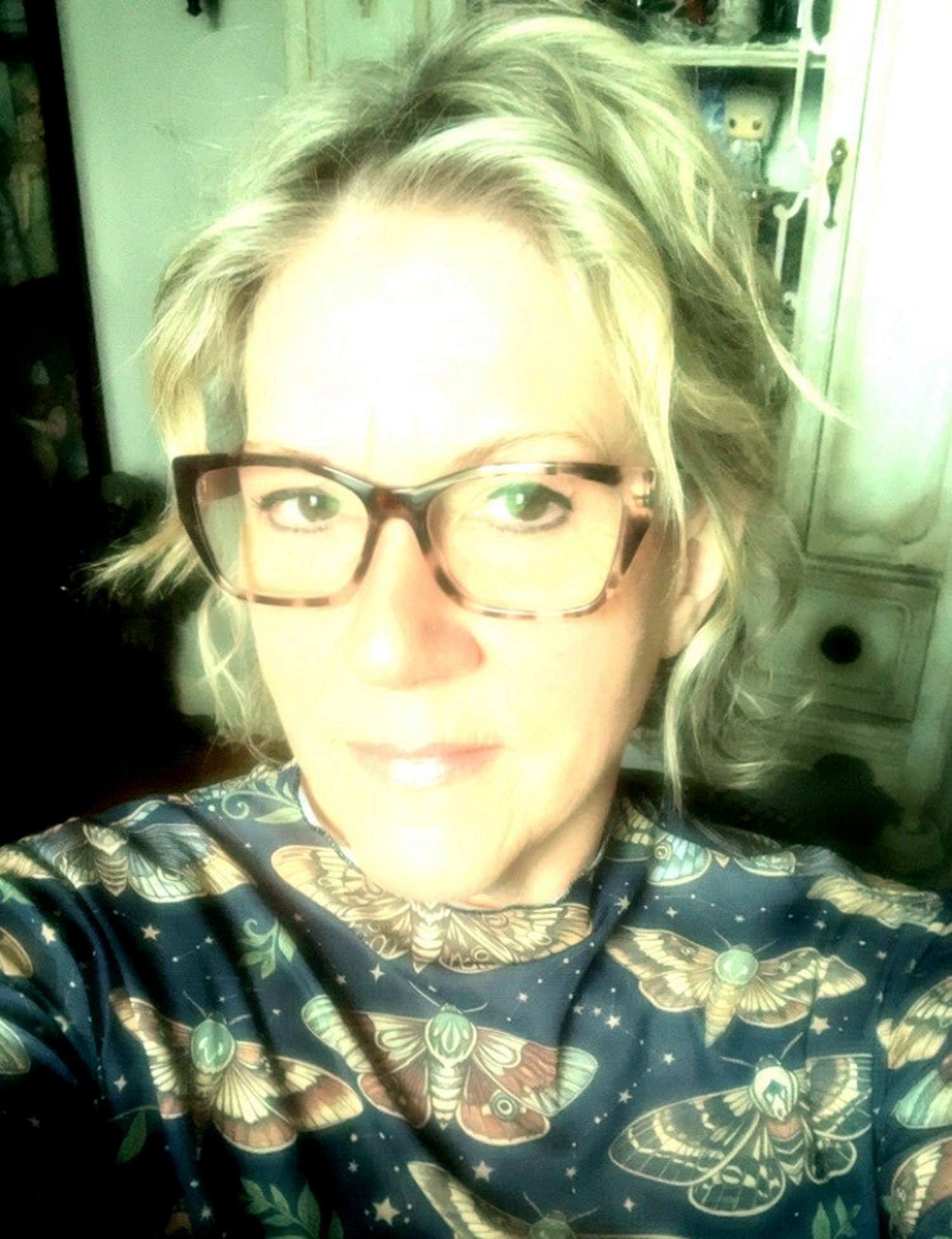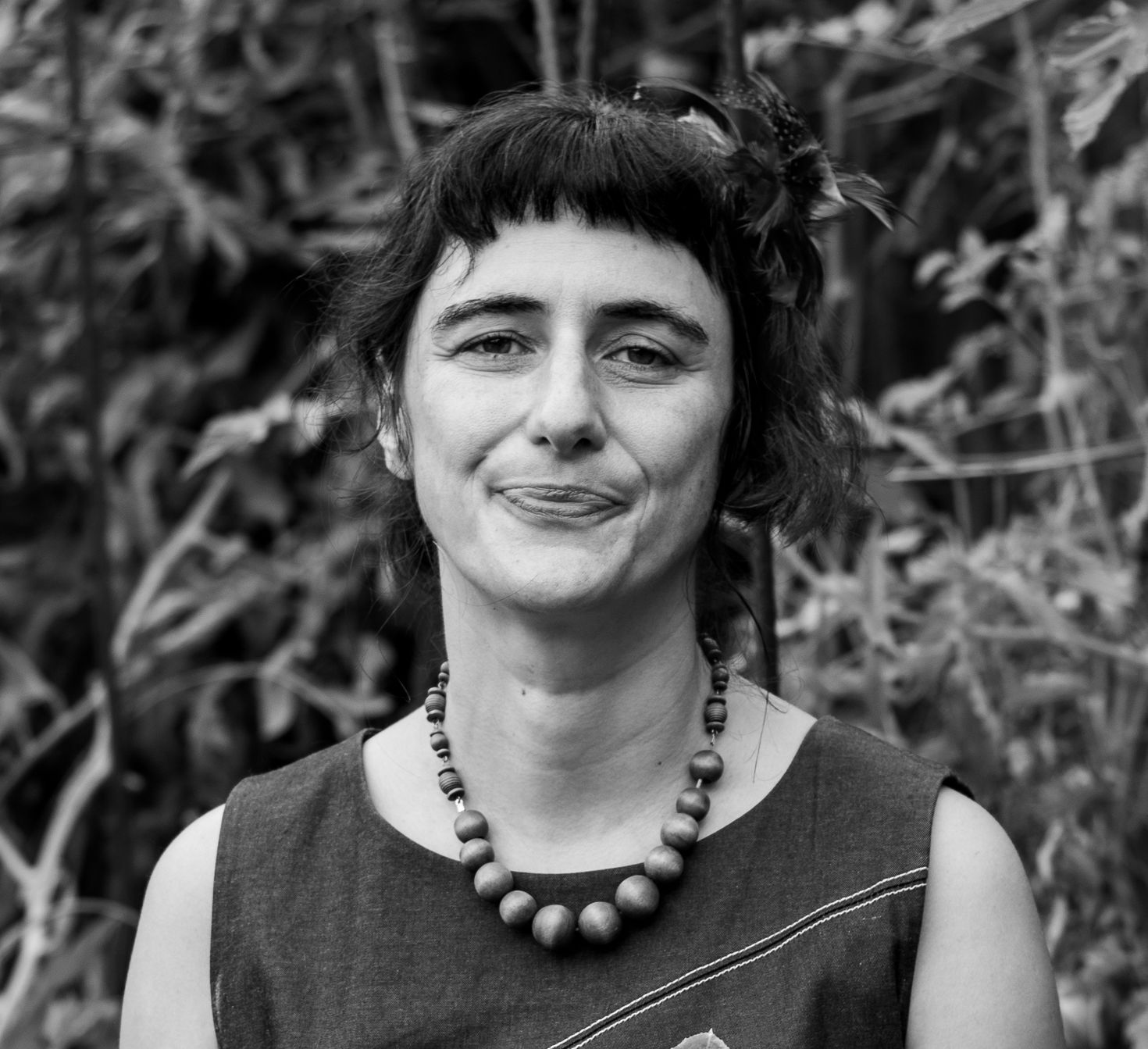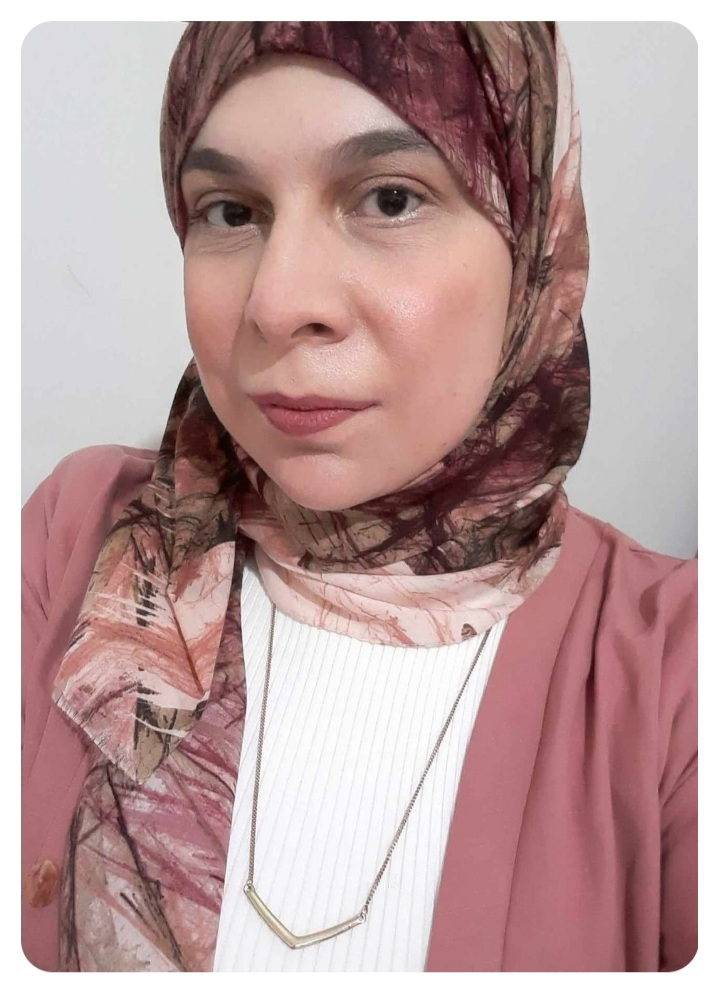
APR: Hajer, listening to you reading your poem ‘Iman’ on Chestnut Review Winter Issue 2026: https://chestnutreview.com/hajer-requiq-iman/ what occurred was the way the sonance of your voice complimented what you had written, much like a song. It’s easy to be taken-aback by the grating, jarring voices in art and literature. I tend to subscribe to the aesthetics notion that a voice can connect to words by becoming part of those words. Did you feel you were embodying this poem as you spoke it aloud? In your description of this incredible poem, you said it was written on the; “intersections of love and faith, on the question of how one can experience religion without being religious. I think we are oftentimes struggling to define divinity because we are confining it to a strictly theological framework or obfuscating it with grand notions and abstractions.” I found that very illuminating, especially right now with the war between American and Iran heating up and destroying good will across Arab lands and beyond. I was really moved by this poem, especially the lines: “I’ve forgotten every prayer for protection except her face.” Your ability to convey the love you have of your mother and tie this to a larger question of faith and intersectionality, is remarkable and now more than ever necessary. Do you believe poetry can accomplish the impossible and create bridges again? You write: “I’ve found that the easiest way to be religious is to love and be loved back.” I couldn’t help thinking, if only everyone felt this way.
HR: I think one of the common misconceptions about writing is that it takes place solely in the realm of the mind or the spirit. However, I strongly believe that the process of putting words on the page is also a bodily experience as much as it is an intellectual or spiritual one. Paul Auster beautifully compared writing to walking once in an interview. He described how he would ritually get up from his seat during his creative hours and circle the room to generate more ideas. I don’t personally share the same routine, but I feel the words on my skin much like an extension of my body before they even reach paper. I feel them rising from the pit of my stomach like scattered bits of lava, like some kind of inner volcanic eruption — burning and blazing hot. Imagine being repeatedly pricked by a needle or grazed by a wall; this is the kind of physical contact I experience with language on a daily basis. My voice, I believe, is simply the auditory transcription of that contact, the inflammatory response to that external pain.
Yes, yes, and yes! I do believe that poetry can build bridges and more so than any other literary genre. A poem is meant to be read aloud in public in the first place. Think of the human voice as an invisible vein stretching from one heart to another. Think of the air as a heartbeat monitor that transmits the electrical waves of human connection. Already, poetry offers itself as a multi-media art where sound and vision criss cross and converge. I think to see a poem in a one-dimensional way is to reiterate the hegemonic rhetoric of colonialist and capitalist power structures: “White, male, civilized…etc.” A poem defies these rigid identities and dilutes whichever cultural connotations they carry. Human experience is so fluid and complex that the borderlines between race, gender, faith…, etc. become impossible to demarcate. And what better way to convey these convergences than metaphor? A metaphor is meant to connect two distant things in the world, to forge together two seemingly disparate paths. A metaphor is intersectional by definition and therein lies the power of poetry.
APR: In your poem ‘In Honor of Orange’ you write:
“If only there was more of my mother in the world,
more of our kitchen and orange fingertips,
how safe everyone would feel even sitting
around their own remains.”
This struck as the core of what matters most. Again, speaking to what’s happening politically, this poem really resonates with me. When you write poetry, do you feel an urge to combine what you see happening in exteriority with a more personal reflection? Because you achieve this repeatedly in your poetry.
HR: I think whatever I write is always a polyphony of voices — my own and other people’s. My personal experiences are a good starting point for my poetry, but not necessarily where I want to end. I find it of paramount importance to expand whatever it is I am wrestling with internally into the external world, to dig for the universal commonalities in it. The fact that two readers from two completely different cultural and religious backgrounds can find a meeting point in a poem, can shake hands and bump fists like old friends do, never fails to amaze me. I think we are often misled to think that just because we are situated differently in terms of culture or politics that we cannot share space. In fact, we can. Art shows us that we can. Art is one of the rarest media that allows for human interaction without having to interact in the first place (not verbally anyways). People meet every day in a poem and don’t even realize it. A great poem, I believe, can manage to speak to what is essentially human in us, even when it is most politically oriented or culturally embedded.
APR: You have talked about how English is; “devoid of the lyrical quality and emotional density typically associated with Arabic,” and I think this touches on why poetry written in Arabic (and other non-English languages like Persian, Urdu and Sanskrit) have a lyric beauty to them that is hard to capture in English. Given this, why did you decide to start writing poetry in English? You publish in a lot of translation-focused journals like Tint Journal, and this is assuming you value the benefits of ESL publications for their appreciation of languages other than English. In previous interviews, you have talked about how you attempt to; “investigate the myriad dichotomies and contradictions inherent to our speech, and how our mode of being and experience of the world are continually shaped and unshaped by the language(s) we subscribe to.” Do you think when we shift and begin writing in a new language, as both you and I have done, that we are subject to lose this? Or gain something else?
HR: I don’t really think that there is anything “lost”. At best, it is recycled, re-invented, cast into a new form. Writing in a different language than my own has helped to push against any preset boundaries and to test out how far my voice can travel. I think at some point during my teenage years, I was writing Arabic poetry with a kind of cultural consciousness that handcuffed my creative imagination. And then I came to discover Sabah Khodir, Warsan Shire, Safia Elhillo and many others who experimented with both theme and style against the norms and expectations of their societies. Put figuratively, English was like a complicit prison officer who secretly slipped me a key when I did not even realize I was lying behind steel bars. English freed me from the relentless urge to please the reader, to pat him on the shoulder and to lull his mind into a dream-like state. Now, what I consider to be my most successful poem is the one that jolts the reader from his sleep and prods him into questioning his own opinions and worldviews.
The truth is I did not “decide” to start writing in English. It happened rather naturally and spontaneously. Funnily enough, I don’t remember the exact moment I picked up my pen and began to scribble in English. I have always been an avid reader and imaginative child. My fascination with language started early on, even before learning the alphabet at school. I remember watching cartoon shows on T.V. and being completely taken by the sound and rhythm of words. I would mumble along and then recreate those scenes by talking to myself and mimicking the tempo and intonation of characters’ speech. Having this kind of premature sensitivity to language, whether Arabic or English, has definitely reinforced a poetic understanding of the world.
APR: You’ve mentioned that; “Arabic is a kind of dysfunctional ‘time machine’ that the speaker relies on to retrieve a lost world.” Which I found fascinating. In your poem ‘Rhetoric Reconstruction’ you write:
“I say “ya rab”
like it’s the quickest way to sail back home,
hoard letters in my knapsack in case they do form a coast.”
I read a lot of poetry in translation and poetry using other languages, but I find when you insert Arabic in your English poetry, it feels necessary not pretentious or self-conscious, but part of the poem. In the conclusion of this poem, you write:
“I cannot help but wonder why it hasn’t abolished the distance
between me and Iraq: my grieving grandeur,
my Grammar and my God.”
To me it reads as a soliloquy to multi-linguicism as well as lost cultural artifacts hidden inside us when we immigrate or generations before us are lost. In your poem ‘Sorry about the Typos in Hayati’ you write:” If coughing up carcasses of native ancestors is part of any speech, then I am doing it well.” Can language keep these things alive? Is that ever a consideration for you as you write?
HR: I don’t really like to think of myself as the custodian of native culture or the gatekeeper of ancestral heritage because that can ultimately lead to a kind of literary patronizing disguised as “doing the right thing.” However, I do believe that everything we do with language is preservative by default. Whether we are seeking to embalm the faltering parts of ourselves, our families, or our cultural backgrounds, language always acts as the conserving agent to everything we hold dear. I think one of the most harmful illusions that the modern discourse has perpetuated is that you shouldn’t be regretful of anything in your life. I don’t think that there is the faintest modicum of human truth to that credo. I have so many regrets, and that’s one of the reasons I write. That’s why I constantly re-visit my past through writing: I want to reunite with my former self, to ask her out for coffee, to talk for hours about all the “could’ve been’s” and see how I can bring those into my present. I don’t really believe that we sit to our writing desks as a one block of a human being; we sit in pieces, often mangled and rehashed, as an assembly of all of our personal phantoms as well as the ones that our cultures have created in us.
APR: Your poems often posit using hypophora, questions that answer themselves, not like rhetoric but by posing questions within stories and images. Sometimes using anadiplosis to highlight the value of a word by repeating it differently or using caesura as conscious but natural ‘breaths’ in your poetry. How much does form play a role in your writing consciousness? In the earlier mentioned poem ‘Sorry about the Typos in Hayati’ you also write: “I don’t know what else to close my eyes to and say “Ameen” except the Taylor Swift songs or the Starbucks’ Super Bowl commercial. Ana assifa this is the only way I can speak: with scandal splayed across syllables and sounds.” I found this a very modern way of describing the disconnect between tradition and future-leaning thinking, whilst considering it through the lens of multiculturalism, whereby we relate to ancient things through modern things. For some Muslims this would present an impasse, that of not behaving according to expectation, and this is true for Christians, Jews, Hindus and others, but how do you reconcile this when you seek to experiment and be honest in your poetry, against the potential condemnation of a more hard-liner theist?
HR: This might strike you as surprising or unsettling, but I don’t seek reconciliation. Reconciliation means succumbing to reader expectations, to public desire, and to the general tendencies of the age. What I seek is being honest with myself and my message, and that means writing without censorship and certainly, without auto-censorship. From personal experience, I have come to witness time and time how conservative Arabic readers can be. I have been subject not only to harsh criticism, but to constant humiliation and harassment because of the content I post on my Facebook page. The Arabic reader is not always open to taboo subjects being openly discussed on the table. However, I refuse to play the role of a moral surveillance machine or a religious detection system when I am writing. This reminds me of what Franz Kafka once wrote in a letter to his friend Oskar Pollak: “A book must be the axe for the frozen sea within us.” I believe that it is one of the fundamental functions of literature and of all art: to disturb inherited patterns of thought and behavior, to call into question the givens that are passed down to us, to peel off the veneer of illusions sustained by our societies. Many readers falsely assume that I write with the intention of being daring per say. However, I see boldness as a tool rather than an objective by itself. I am not in favor of employing culturally controversial images in a text solely for their shock-value. Boldness should always be functional and intentional. It is there to serve a purpose, to convey a meaning, to bolster an argument. If it is exclusively used with the purpose of drawing an “ah” from the reader, then it becomes disingenuous and unwarranted.
APR: Your work stands out in a way that takes people’s breath away. You have a tapestry in the way you write that paints worlds in people’s minds. I’m half Egyptian and aware of the history and heritage of writing in Arabic. To the English-speaking world this is relatively unknown, which is a great shame. Why do you think Arab poets are just so gifted? And how can the English-speaking world benefit from their gift? How are you as a woman of Arab heritage, influenced by this heritage in terms of your writing?
HR: I’m not sure whether this is because of my Arab heritage or not, but I feel that everything I write is deeply spiritual even when it is nonspiritual. Ironic, right? I could be writing about socks and shoe blisters, I could be writing about spoons and coffee spills, and it would still sound to me like I’m prophesying some kind of oracle. I don’t normally gravitate towards poetry that rarefies the objects of everyday life, that abstracts human bodies into spectral figures. Poetry doesn’t have to be nebulous to sound smart. It doesn’t have to divorce itself from materiality to achieve some kind of gravitas. I believe that the most powerful philosophical convictions and mystic revelations are the ones that are rooted in the domestic and mundane world.
I think that Arab poets are naturally gifted because Arabic is subsumed in a larger religious framework. A Muslim household upbrings its members on a belief-system that comes with its own built-in linguistic structure. The Quran is more than just a holy book for Muslims; it is a way of articulating the self and the world alike. Its specific morphology infiltrates our everyday lives, percolates through the mechanisms by which we comprehend ourselves and others. The cadence and rhythm of the ayat are the soundtrack to our existence. Now imagine to what extent the exposure to that spiritual education comes to impact the way we conceive and compose poetry. Perhaps it is this very absence of a partition wall between the religious and the artistic spheres which has long produced an unearthly, transcendent quality about Arabic literature.
APR: In your poem ‘Black Salt’ you wrote:
“She has enough black on her skin
to make a revolution out of her.
She has so much history in her hair
no bleach can wipe it off.”
Of all the poems I’ve read on skin-color and ethnicity, I found this warlike rebuke of stereotypes refreshing because it makes no apology in its reclaiming of worth outside the dominant paradigm. For many of us who are of color, whether we look it or not, we are objectified through this pigment rather than understood. Your heroines are fierce in their refusal to subscribe to oppression. Do you find you can be political in poetry in a way you can’t in ‘real life’ or is your poetry a reflection of how you live life?
HR: I think that poetry is much larger and greater than my own life. This is why I am often surprised, shocked even, by the brutality and rawness of images unleashed from my subconscious. I happen to be a shy and quiet individual, distancing myself from public exposure whenever I can. People who know me closely find it hard to reconcile the person they know in real life with the persona in my writing, and understandably so. Social life imposes its own etiquette of behavior. Poetry, thankfully, has no interest in being docile or decorous. If society is a private party, poetry is that uninvited guest who shows up unexpectedly at the door with the unsuitable dress-code. In a poem, I get to experience a less reserved, less restricted version of myself, with no regard to the antics and mannerisms of society. Basically, I get to be the “party crasher”; no apologies made.
APR: Your poetry profoundly moves me, as you seem to perceive the core and intrinsic purpose of every subject you touch on. Perhaps because we both share the alienation of the transplanted and a dislocation from ‘home,’ but you can convey this so powerfully with lines like:
“Our mothers bulged with the past,
fat with yesterdays that now pass for flesh.
We had frayed photos for fathers,
portable shadows,
splinters we hammered into bones.” (What the Road Promised).
Do you believe poetry is who we are, in the sense that you write about these things because they’re your experience? And if they weren’t, you’d be writing about something else? When you say in your poem ‘Bless our Mother’s Feet’:
“Wholeness is out of the question.”
And so, we never aimed for it.
We just pretended to be too preoccupied with breaking,”
You speak for all of us who have lost in similar ways. Unlike a fiction writer, who may become many things in their imagination, do you think poetry is a possession of kinds, a way of telling our stories? Or is it possible for you to write outside of yourself and almost divorce yourself from the subject matter? Or as a poet do you feel it’s your responsibility to write ‘within to without’ and share your deeply personal experiences on a wider stage, for others to relate to, as I have?
HR: I don’t think that poetry is ever exclusively who we are. It encompasses a whole chorus of voices, experiences and worldviews that are orchestrated through the self and others. Whether this is clear to us or not, a poem is inherently dialogic — to put it in Bakhtin’s words. It’s an ongoing dialogue between ourselves, our ancestors, our phantoms and all the citizens of the world. A lot of readers and critics assume that just because I write in the first-person pronoun that my poetry is strictly confessional. Yes, but that’s a very simplistic, one-sided way of looking at it. The confessional label can be quite reductive; it fails, for instance, to reveal the multivalent nature of the poetry that Sylvia Plath wrote. Even in a poem as intimate and personal as Daddy, Plath was able to surmount the trammels of her own subjectivity and position her “self” in the larger context of history. Her own pain became a mirror-reflection of the Hiroshima tragedy and later, of the Holocaust events in Lady Lazarus. This is why I think it would do the reader a great disservice to confine my poetry to an autobiographical framework and to overlook the panoply of selves lying beneath that elusive “I”.
About the Poet
Hajer Requiq is an emerging female poet from Tunisia, who has recently been selected as a finalist in the 2025 Lucky Jefferson Poetry Contest, shortlisted for the 2025 Foster Poetry Prize by Contemporary Verse 2, and nominated for the 2025 Pushcart Prize by DMQ Review. She has also been selected as the runner-up for the “Connective, Uncontainable” Fall 2025 Writing Contest by The Capilano Review and longlisted for the 2025 Gearhart Poetry Contest by Southeast Review. Her poems have appeared in Poetry Ireland, Chestnut Review, and Only Poems, among others. Requiq also writes Arabic poetry, which has been featured in Iraq Palm, Al Oma Al Thaqafia, Uruk Newspaper, and elsewhere. You can read her work at www.facebook.com/Hajer.Rq.