Seeing Things
- Home
- Seeing Things

Seeing Things, her 17th collection, lifts its head to observe again, the small miracles within the every day.
Austin Poetry Review
Seeing Things
Faith often sits at the table in Marjorie Maddox’s writing. She says in her acknowledgements that ‘through words and The Word, we find our way through.’ She is an example of this being true, her enduring thriving, despite cruel losses, the result of family and faith. The author of many collections, Maddox knows intuitively and through the fine tuning of her craft, how to usher the reader on a journey. In this she is a storyteller of her life, and through her life, of ours. Her books are never accidental or haphazard. Each one, much like a novel, possesses a central premise and message. Within that kernel there lies Maddox’s unshattered faith in both God and the spirit-world, to be more than our everyday absenting of miracles. It is that more, within Seeing Things, her 17th collection, that lifts its head to observe again, the small miracles within the every day.
waking boundaries of burnout
and the broken and weary-worn evaporates
into almost-forgotten levitation: you hovering
in another realm not here, depleted, restored. (Ode to Exhaustion)
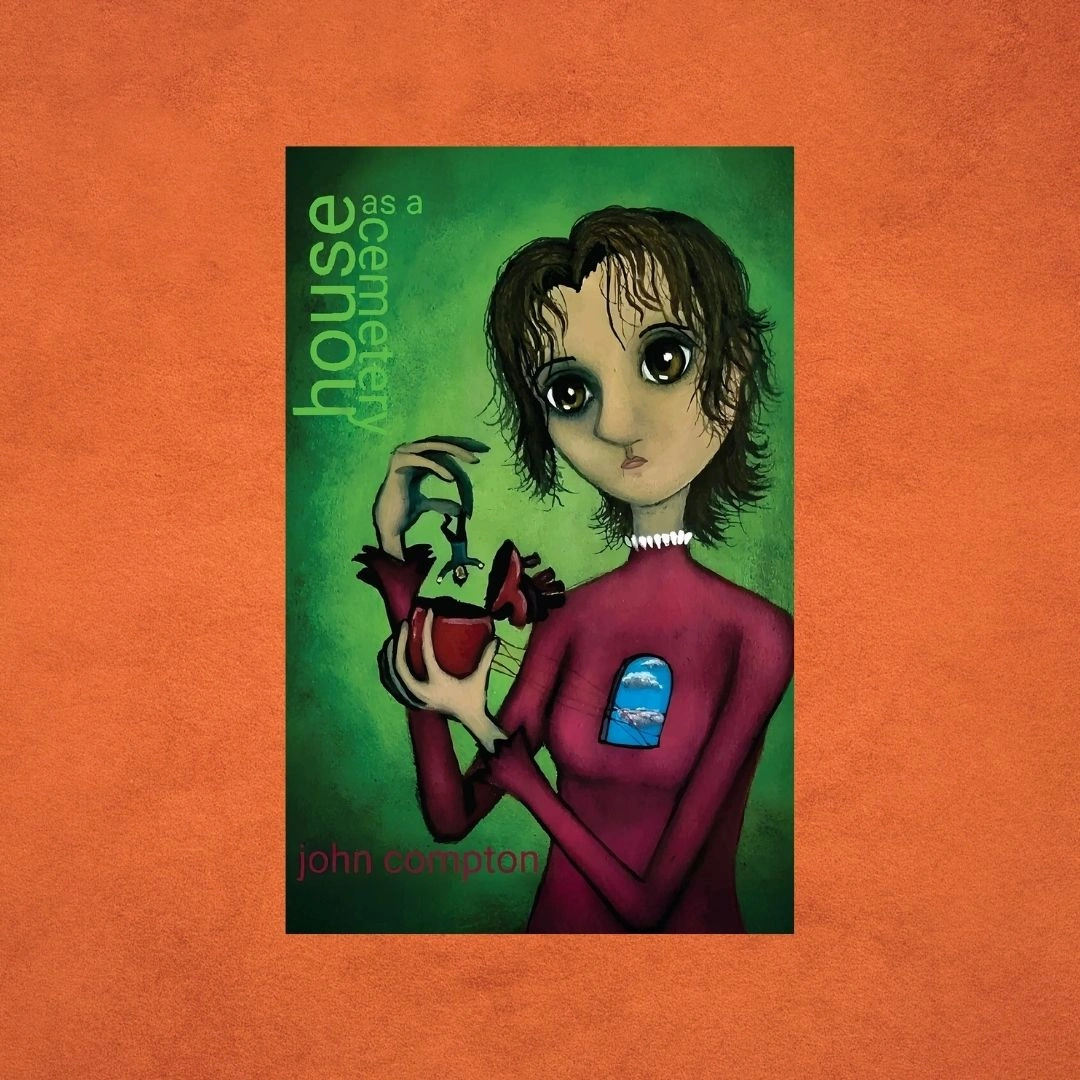
Whilst navigating challenging subject-matter, an author can flounder in the morass of grave subjects or gift the reader the pleasure of reading on universal subjects we are all eventually drawn to. It takes more than a relatable subject to fully coax the reader into our memory palaces. A writer must step outside of their learning and share those parts of them that are inviolate and tender, for us to intimately share the depth of their experience on paper. They must literally get naked on the page. We may assume poets can do this; as part of their learned tool kit, but it’s perhaps the most daunting tightrope to walk, when really uncovering pain. Marjorie Maddox knows pain intimately, and this collection, coming out after the loss of her mother, and written during her decline, with a redolent painting from her daughter on its cover, is the circle completing itself.
Between crises,
Normal enters as faint memory, (Ode to “Normal”)
At the same time, having written many of these poems in 2018, the author is pre-pandemic, assessing the distance between her then 90+ mother, living hundreds of miles away in a care home, and how they maintained their connection against the odds of distance and life-demands. Most memorably this is evoked in the story of a rabbit, where both take turns in naming the rabbit during calls. It is the sheer simplicity of this discourse and its universalism to us all who have such experiences, that is devastatingly emotive.
Each day, across invisible sound waves,
my mother and I name and re-name the hare,
the bunny, the cottontail, the lapin,
the breathing bundle of fur and ears
hopping in and out of our words,
memories, what we string across miles
and years. (Still Life with Rabbits and Phone)
Because it is not simply a rabbit, or a phone conversation, or a mother and daughter, but a lifeline between beginning and end, with all the joy that entails and also the recognition of loss before it comes; and the grief of realities, such as parents having to be in assisted living facilities and the decline of memories that have taken on even greater importance than when we first had them. There is a deep grief in this rendering, but its one that is so carefully wrought it’s bearable in its relation to us all and the solace is in the remembering and the love between the words.
And yet—
you are happy to be not-
happy or at least not un-
happy to be surprised somewhat-
happy at this not-quite-but-almost-
turn into memory, into the strange world of then-
and-now, with now better after-
all, (Hyphen)
There is a transcending idea of resurrection and the potency of remembering those gone before us, that is both spiritual and permanent. Not depressing or navel-gazing, but rather, a pointed observation of how we lose and the process of it. Reading this, you may wonder at how this can be performed without being unbearable; but that’s the poet’s greatest parlor trick. Sharing things that without the encapsulate of poetry, would be too much, just enough that they are not and instead, become necessary artifacts of living. Because when we live, we also stand to lose, and that inevitability can be tragedy or part of the process and if the latter, then being circular rather than linear, isn’t as horrific as first appears; because as Maddox points out, as writers and readers, we immortalize those who matter.
in the broken laughter of your last
typed joke, which I didn’t see
until now when you reappeared—
just like that—on the stark screen
of this saved page, (I Watched You Disappear)
When framing a scene in the third person, we depersonalize a vignette, an event too painful to recall directly and in so doing, it becomes a theatrical performance, where we learn: ‘Whose face is screaming?’ The intensity of a scene and all the varied fallout that comes from such unbearable experiences, ensures we do not inherit the immediacy of that emotion but we do witness it. It may appear to be a dishonest way of approaching truth, but it’s actually elegant in its balancing act between what we can tolerate and what we can learn. Again, this is at the heart of poetry, considering that there are stories within poems that whilst not bound in prose or linear form, will play out.
Her hands slippery, she cannot catch the woman
whose every bone protrudes. Will they break?
Is there blood? Is she breathing? Lift and cradle her.
She is as light as a corpse. (A few moments after a fall at her assisted living facility, my mother forgets)
The visceral indignity of infirmity; the dual horror of the children, witness by proxy or imagination to the erosion of their parent, is transmitted so well when written simply, beyond what can be borne. Yet with faith and the wicking of poetry to hold enough away, that we are able to bear it. Maddox says: “She is herself, alive, a daughter beside her. It is enough.” And the voice is that of the daughter, in a new role, horrified by the specter, asking herself the impossible questions. This question comes around again, with the final question at the end “is it enough?” This has become the resounding question for us all, how to bear the unbearable? What’s interesting and accomplished in this acute rendering is how it is every bit as disturbing and intense as a blunter poem, perhaps because Maddox chooses to articulate it from a distance, and like reading a play, our minds enact the scene more vividly.
Good,
she thinks it said once. Good-
night. She does not remember
her answer. She does not remember
if she answered at all. (Details)
We may shy away from watching programs about dementia in part because they’re plain depressing, and in part our own fears of our as yet unknown outcomes are hovering. So, it is never easy to read of infirmity and loss of self, through the destruction that is dementia and the ravages it appears to take on so many. In this; a collection where this subject is frequented, it can be a hard read, made less so by the solace that can be poetry, even when touching on things that disturb. I would not be able to read an entire fiction book on the subject, but I have often read poems that speak to loss of selfhood through dementia. Maddox’s interpretation of her mother’s decline is artful in its beauty despite itself and therein lies the comfort from the terror.
as she slips now towards sleep. Always the gray
darkens to night. She does not know the day. (Dusk)
In Exhibit: Memory Loss, Maddox’s voice is far more immediate. She talks directly to the reader; and her mother, and the voice has a resonance and urging that is really evocative and painful in its tenderness with lines like: “The end is not / in sight. Mother, / come look. For all of us who fear or experience directly, the: loosened and tightened / seconds / days / decades only to un- / ravel again,” There is this knowing of the cruelty of dementia, how physically a person remains, with inklings of themselves enough to cause you that familiar pain, but the person you knew when they were all there, is utterly gone, like in the poem Ode to Memory: “Memory, wearing me; / future-tense me still clothed / every inch in you and him.” These are ideas of holding memory dear, as it slips, still it stays, in the hearts and minds of those around the people who are stolen by memory loss, that strange land that affects the witnesses even more than the patient.
This permanence we share
is what we write, the scars and tongue our own.
The secret letters link our here and there, (#MeToo)
There is no good dying, but the slow running out of selfhood, turned to stranger, is acutely cruel and baren. Writing of this is also painful; but aside the catharsis for the writer, I believe it lends an awareness in us we cannot shirk, because to pretend this disease only touches a few, is to deny our future experiences. Maybe no good comes of knowing this; though I am inclined to think, a poets greatest bequeathment is to write of what we’re not always able to face in such ways that we can.
I’ll toast her daily, postmark
card after card after card
after card with no space
whatsoever for any
return address. (My Mother Sends Birthday Cards)
It is interesting Maddox talks of ‘useless calendars’ and you feel a little of her ire and resentment at the loss of her mother whilst she still lives. Maddox notices that such wishes are ones ‘we’d rather wait on’ when it comes to that mixed blessing of her mother sending a card but not recalling correctly the dates, she used to be so concise about. This poem ends with the subject considering sending cards with no space for any return address. A juxtaposition between the material world, spirit world and that in-between place inhabited by those who forget, is deftly rendered. This is all about memory, and in the eponymous poem Self-Portrait with Memory, Maddox really brings us to the most acute tension of loss when she says: “then—suddenly—for the love / of Memory, draw her too close—” This after seemingly rejecting the repulsions of ageing, then the irrevocable ache of loss, and its resulting surge to gather close. There are dance steps in these words, there are visual cues and films playing throughout these words that bring them to life and cause you to ache alongside them. Ache is not all you will experience; as Maddox delves deeper into the fickle subjugation of dementia and its wrought atrocities. In the masterful, searing poem Manners, Maddox is able to quite uncannily evoke the dreaded scenario of a parent becoming combative and switching between the nice-mannered mother to angry stranger:
my mother pleads with us to find
her daughters, who “are always happy to help.”
“Thank you so much,” she smiles,
before glaring at us suddenly
with someone else’s impolite eyes.
Poets who are restlessly generative are often animated by the nexus of idea-feelings they return to and augment, but Maddox has no such restlessness. Rather hers is a considered depiction through poetry, where deepest feelings are not involuntarily shared, but with measure and heart-breaking fidelity. To some extent, upon reading, we must then repudiate the mental health ideology which would have us believe that we, and we only, have the power of make ourselves happy or unhappy because of its clear denial of the natural world, which unlike the spiritual, may hold a host of horrors, to which we are subject.
There is time. Is there
time? There is.
Let us cut our own
Is there time? There is despair
Is there?
and save them. Here is
Is there? the knife.
Do it now. (Pact)
Often there is a pressure on the poet, to package themselves, a pressure the more pernicious because one’s own self feeling as an unreal spectator in one’s own life, is anything but self-contained. Simultaneously then, there is isolation in grief, and expression in pain, neither ceding to intellectualism but rather, the very basics of our selfhood. Perhaps the ultimate question becomes, when our self is gone, who are we? Which Maddox herself recognizes in her timed prose; “my mother / does not know that she’s not / who she is at the moment.” She focuses on the climb we take every day, to get through what doesn’t seem possible to get through, the toll it takes, and the hope we have to survive it:
the names, the street, the day, the why
of what was said, the when,
the details drenched in stress,
the hormones hammered, the constant
construction of cortisol,
stone by stone for weeks,
for months, for years, for decades. (Cortisol: This Is Only a Test)
Maddox articulates this odd longing to stay in the poem That Sound, when she describes it as being “in bodies we don’t want to leave.” There is an inevitability written here, with lines like: “into that other room of grief / we knew we’d walk in.” Again, there we find an acute recognition of the process, alongside notions of estrangement, loss, guilt and appreciation of the futility of those responses. So much is addressed here, bravely without abundant self-recrimination or burgeoning emotion, whilst at the same time, very tender, very lasting in its poignancy and reconciliation.
re-playing
the loss she breathes in and out, the heaving
still the signifier of happiness lost
and—not replaced—but something
close to respiration eventually
filling up the lungs of the daily. (That Sound)
We could be superficial and believe this is all too direct a portrayal of death and dying to be palatable, but if we are spiritual people at all; that of course is an impossibility, for we are surrounded by it, the filters of which are thinner than we realize; as we cross from one state to another, and back again, in our preview of dying through our parents. Interestingly however; the collection doesn’t require that you stay in that state, but offers you the renewal of generations; Maddox’s daughter’s art on the cover, Maddox’s own family after her family of origin. There exist no constraints legislating the language and expression comes purely and without censor, as with all our favorite writers of the world around us:
she was what she said was
is was what she said That is all
she remembers (What Her Teacher Said about Nagasaki and Hiroshima).
Whilst for those of us who have no children, ageing can be a terrifying prospect; many of those shored up families who have created themselves out of history, will endure the most unimaginable losses and still retain their wholeness. That is the essential message here; alongside an anchoring to ancestors, and the processes of dying and recommencement. Herein lies the ‘seen things’ of this collection, not just ‘seeing things’ in a literal sense, but a spiritual one, and the comfort that ultimately bestows. There is no elusiveness in Maddox’s refined rejoinder on the world. She acknowledges that reconciliation can suture wounds, and she attempts to set the rest of the past not in a place of forgetting, but as part of the hopefulness of the future. In a sense, Maddox writes of possibilities offered in fracture, where poetry can be the place where terms are reconfigured to point toward catharsis, and when that is not possible, then tolerable moments that can pass into snatches of joy:
hidden somewhere before
you were hidden in this home
below and outside the horror
of not waking to a kiss,
the coffee, a working radio
still playing oldies. (Hide)
A person can’t leave their own body, a writer can’t leave their language behind. Sometimes we have to move within our confines and we shouldn’t feel we have to be fantastical to ensure those confines are relatable to the world-at-large. Often it is the interior lives of poets, people are most fascinated by or can relate to the most. Whilst it takes a lot to really unearth those inner pieces of ourselves, to do so without narcissism or ego is to ensure a poem can be a highly connective thing; a way of reaching forward that can only be accomplished alongside other human beings, like in the hauntingly prepossessing poem Alzheimer’s Aubade. “Look, the light / is brighter now. The kind man helps her stand. / To see the morning sun, she takes his hand.” It is the weft of poetry to be about humanity and our world, coming from within to without, in a lasting and meaningful, continually renewing flower.
where she recognizes your own
aging hand held out to her
like this, and she takes it,
begins in her steady voice
to tell her story of after. (Self-Portrait after Memory)
From the editors