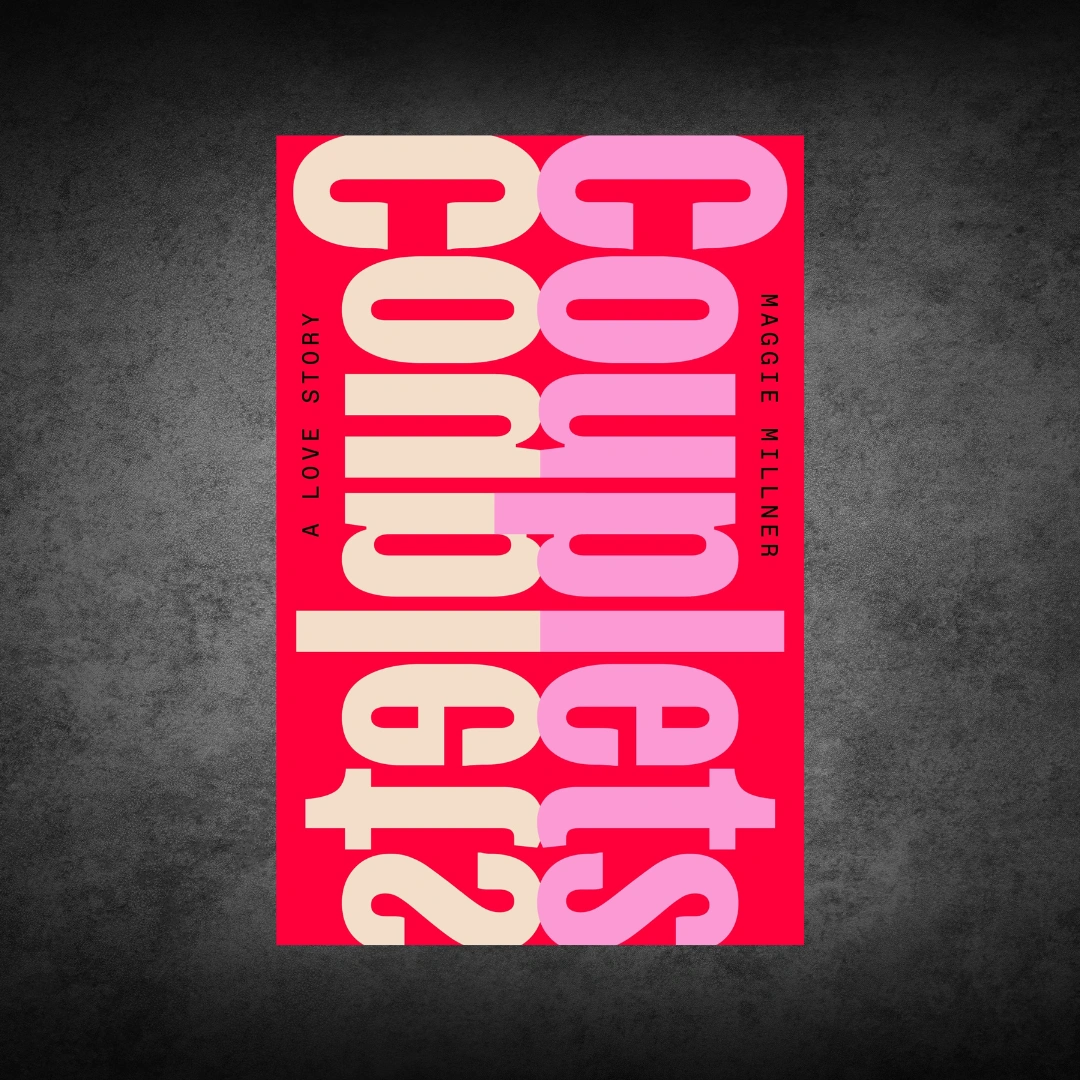
Couplets
- Home
- Couplets
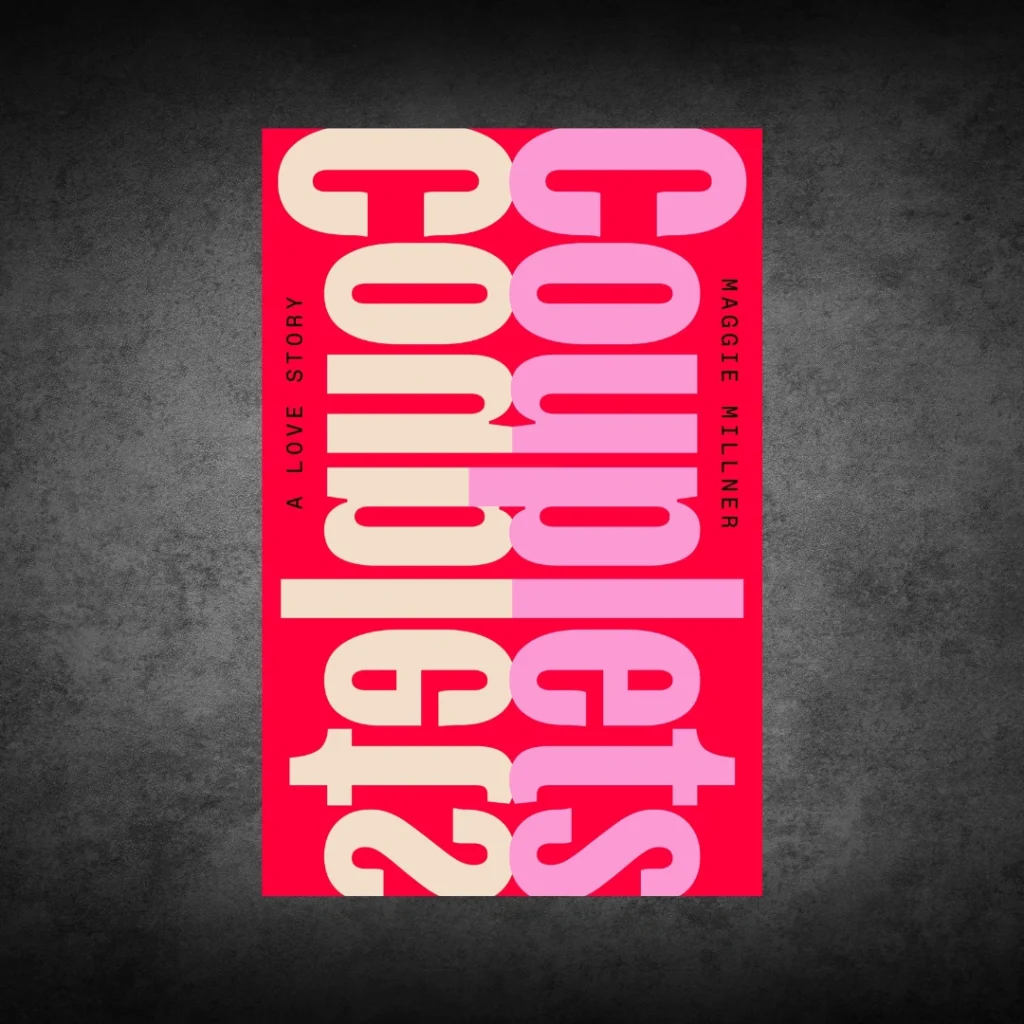
More novel than poetry collection but more poetry than prose, Couplets feels like longing, like erotic, obsessive desire.
Turi Sioson
Erotic Love Filtered Through Lack and Loss: The Dichotomy of Desire in Maggie Millner’s Couplets
More novel than poetry collection but more poetry than prose, Couplets feels like longing, like erotic, obsessive desire. Sections are filled with literary and musical references such as Middlemarch, the Beach Boys, Virginia Woolf, and June Jordan; reflective vignettes are permeated with uncertainty and bittersweet remembrance. Through cheeky, conversational turns of phrase, Millner makes rhyming couplets sexy and entrancing. It’s a traditional poetic form that has in modern times garnered a stereotype for being “boring,” yet here slant rhymes and surprising line breaks are a siren song. Take poem 1.7, for example, the language caged within strict rhyming couplets, cascading into a clear, flowing image:
“Last year, I met someone I thought / I couldn’t live without, and in the process lost // another without whom I thought I’d / die,” writes Maggie Millner in her charged debut book, Couplets. Tracing the at-times obsessive, at-times confused and fragmented love story between the speaker (the “I”—but in prose sections, the “you”), the woman with whom she begins an affair, and the man she ends a long-term relationship with, Millner digs into the contradictions that reside within our desire for others.
More novel than poetry collection but more poetry than prose, Couplets feels like longing, like erotic, obsessive desire. Sections are filled with literary and musical references such as Middlemarch, the Beach Boys, Virginia Woolf, and June Jordan; reflective vignettes are permeated with uncertainty and bittersweet remembrance. Through cheeky, conversational turns of phrase, Millner makes rhyming couplets sexy and entrancing. It’s a traditional poetic form that has in modern times garnered a stereotype for being “boring,” yet here slant rhymes and surprising line breaks are a siren song. Take poem 1.7, for example, the language caged within strict rhyming couplets, cascading into a clear, flowing image:
When I was with her, the physical
experience of my pleasure—the little
death—seemed to make the nauseous question
of whether I was in possession
of a clear and unified self
mostly irrelevant. Those days, I was something else:
a soft vacuity. A sort of net.
No guilt, no age. No epithet.
In this opening section of the book, the speaker expresses her longing to sexually pursue women during a time in which she has only a man; later, when she turns exclusive with her female lover, she fantasizes about and reflects on her time with her ex-boyfriend. This leads to a conflicted, want-ridden internal dialogue illustrating the multifaceted way desire and love take hold of us. “OK, so nothing lasts. / The proof of life is in the aching,” she writes toward the end of the story. Within the speaker’s dwindling connection with a woman she’s upended her life for, Millner reveals how it is through lack and loss that desire grows, thrives, and drives the sometimes disturbing, often impulsive life of erotic love.
Through first- and second-person reflections, Millner roots love and desire as much in internal feeling as in the mutual love the characters share, replicating the experience of the relationships in a multifaceted, realistic way. As the story unfolds, the reader becomes unable to put the book down, even as the story contained within the lines begins to hurt.
When the speaker first meets the woman she’s to fall in love with, she perceives her as interesting, where the speaker herself believes she’s lacking: “I thought she thought I was trivial / since she was queer and edited periodicals // and I was a poet who had never dated a woman”; later, when she becomes enamored with the woman, steeped in thoughts of a “vivid new reality … [swirling] / behind a scintillating door … marvelous and false,” she wonders aloud to her boyfriend if “it” would be okay if she had his permission. “What do you want to do, he asked, that calls for my permission? / You looked past him, out the fogging window. Women.” The speaker is so taken with what (or in this case, who) she believes she’s missing out on that she is convinced she must have her, yet at the same time is unwilling to let go of the man she has loved and lived with for several years in a moment of excitement and intrigue. As a result, she attempts to hold both people at once, regardless of any pain that is to ensue.
Anne Carson has an essay in her 1986 collection Eros the Bittersweet in which she notes desire as similarly antithetical. In “Ice-Pleasure,” she analyzes a fragment from Sophokles’s satyr play The Lovers of Achilles. “There comes a point— / you can’t put the melting mass down, / you can’t keep holding it,” Sophokles writes in the fragment. “Desire is like that.” Carson points out that the analogical poem—which compares “ice-crystals in the hands [of children] … at first a pleasure quite novel,” to desire—does not explicitly connect this want to erotic love. Yet “the way [time and pleasure] intersect may feel like eros,” Carson writes.
The speaker of Couplets—never named—is a poet documenting her love story. Time is non-linear, and simultaneously cyclical. Sensation and chronology intersect in a way that is visceral for the reader. In one poem, the speaker even imagines an archivist pulling the couple’s texts “out of the nuclear detritus” to display to the public. “This is the sentimental stuff, / they’ll say, of homo Homo sapiens in love.” Though the story feels immediate in its lust, excitement, hurt, and uncertainty, past tense narration, memory, and reflection remind us that eros is still alive and well, encased in the book itself.
In Sophokles’s fragment, “the desire for ice is an affair of the moment,” as “holding onto ice delights children, for that is the novelty.” Even in increasing amounts of pain, as ice melts in the hand, the one who holds it is compelled to have what once was lacking, and what will in only a short time be lost. The desire Millner’s speaker feels for something new and unfamiliar—an erotic love affair with a woman—is a novelty as delightful as it might later be damaging. Through Carson’s argument, we realize that if there was no stinging, rousing sensation that came with caging an ice cube between your fingers, there would be little desire to do so. Feeling something, however fleeting or smarting, is more enjoyable than feeling nothing. Likewise, the speaker’s new to-be lover is not another run-of-the-mill man—they are a woman, an unfamiliarly queer one at that. The novelty of the lover’s life and personality catches her attention, introduces new sensations both physical and emotional, and inspires her to look beyond the boyfriend she’s had since she was 19.
Carson also touches upon how the adjective potainious that Sophokles uses in his fragment “denotes something fresh and untried, perhaps newfangled,” just as the connection between Millner’s speaker and her lover is at the beginning of the book. “As lover you are pulled into vertigo ‘over and over again,’” as the novelty of what you desire compels you toward and away from it in turn—“the lover is split by the paradox of desire,” Carson writes. Millner’s speaker, early in her affair with the woman, does not intend to sleep with her for a second time, had been decidedly avoiding it, yet: “Immediately upon seeing her, you felt flushed and exposed, as if you’d been caught crying.” There is a surprising pleasure that arises between lover and her sense of reason, thus keeping an erotic love alive against all odds, at least in these particular scenes.
Millner’s use of “you” in the more reflective moments of the book supports this cyclical newness, turning personal experiences and memory into something public and somewhat performative:
She asked you to come upstairs; you did; to get into her bed; you did; to press yourself lengthwise to her; you did … to kiss her on the mouth; you did; to kiss her with tongue; you did; to let her touch you once, just to see if you were really as wet as you said you were; you did … to read her the erotic poem you loved; you did…
Here, Millner crafts distance between the speaker and her actions by referring to the speaker as “you,” making it seem as though her protagonist had no control over herself in the moment. In the act of reading these prose passages, the reader becomes the “you.” Placed directly inside this act of erotic love while the speaker simultaneously lives alone inside its telling. This appears to illustrate the speaker’s sense of regret over the memory, even as the longing is clear within Millner’s diction and sweet, melodic rhythm.
Millner’s love story and Carson’s essay underscore the dichotomy that exists within the everyday feeling that drives us to act in irrational ways: on the one hand, we want to hold the ice, to have our love affair, but on the other, we reject the often inevitable loss—of a person or situation—that comes with our indulgence in love.
Just as Millner and her speaker push to tell the story, just as the reader is sucked in by the oscillating narrative and lush language, the protagonist is so enthralled by her female lover that she continues the relationship, regardless of her mental anguish as she struggles to keep up with the lover’s differing life and values. “You could have had everything you wanted, / had it been what you wanted,” Millner begins her coda. Yet it seems it’s the sensation of desire itself (the feeling of an ice cube melting in the hand, if you will) that the speaker truly wanted.
As a whole, Millner’s Couplets is what it explores: obsession, reflection, and perpetual longing against the speaker’s will. The book’s poetic form, dating back to Middle English, is made through experimentation as novel as an ice cube in the hand of a child. “You / will lose again,” Millner’s speaker concludes. “And no matter what you do // you can’t not want.” How wonderful and terrible that fact is. Driven by the joy of experiencing something full of unfamiliar sensation, Millner makes it clear: desire will forever push us in and out of irrationality, recklessly and wonderfully.
Turi Sioson (she/they) is a queer, Filipina-Italian American poet, editor, and publicist in Austin, TX. She is the publicity director and poetry/fiction editor at Sunstroke Press, publicity manager for Abode Press, and a reader and reviewer for ONLY POEMS. She holds a BA in English from The University of Texas at Austin. Her work has appeared or is forthcoming in The Hopkins Review, Epiphany Magazine, The Texas Review, and The Freshwater Review, among others. You can find her sitting in the sun after a long swim or at www.turisioson.com.