Lumina Station
- Home
- Lumina Station
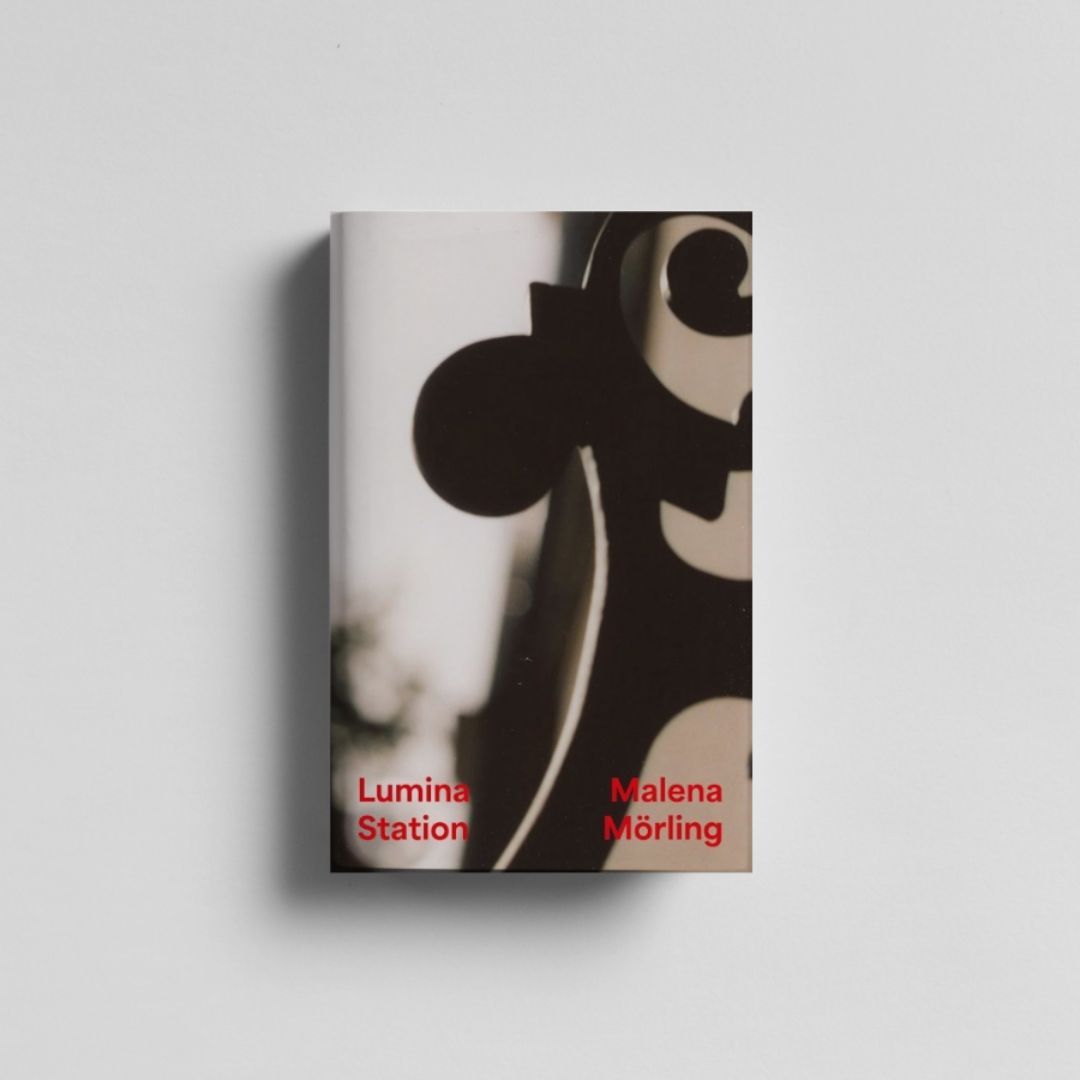
Mörling’s poems... are simple at times, multi-layered at others, but always intensely alive.
Austin Poetry Review
Lumina Station by Malena Mörling
Malena Mörling’s Lumina Station possesses subtle beauty throughout. We locate depth without being told it, through highly visual vignettes within the poems. Rather than prescribing a response, she unspools stories and questions such as in, ‘The World’ where she says in response to; “What are we doing / in the world?” a few lines that echo-refrain in their intensity:
Where they drive
their little toy cars
and trucks up
and down
the steep
imaginary
roads
of the mind –
The physical structure of the poem, the reflecting consideration of ‘what are we doing in the world?’ culminating in:
What in the world
are we doing?
In the world
where the children
are playing
world.
You could have used lots of imagery and different language, to poetically speak to the same theme, but the value of spartan language with close repeating and an echo refrain works more like a beseechment, where the speaker becomes us, becomes the children, becomes past-and-future and that’s very evocative in its own right. Whereas, in ‘Not a Sparrow’ the language is far more painted:
The thrush
Was dressed in a map,
Its tiny continents
Drawn on deep yellow
With a fine black marker —
Here, memory has a brush and pigment, and this swirls around concepts of loss, death and bereavement in an artful way. Using the beauty of language to hint at, or pour over, otherwise difficult to examine subjects, is where poetry finds itself, and Mörling is deft in her handling of this, such as the descriptor of the memory of her mother in the poem ‘On a Train in Winter,’ where memory becomes ‘always known’ and yet, changed:
I could see the lines
on her face had deepened
and she was thinner and taller
than I remembered
and she could have been
any human being.
Consider then, the poet recalling her mother through memories long halls, how evocative yet poignant the sense of impermeability echoes in these words, a kind of estrangement in not recognizing, and a stillness in examining the memory from all sides. Aside from being intensely moving, there’s a sorrowfulness in knowing even memory lies. Something many of us have felt but not been able to articulate to such a degree. ‘At the Salvador Perez Pool’ Mörling recalls her son learning to swim, but it is in the lines:
A dead man does not float.
He is not able to push his chest up
all the way to the sky
through which the sunlight
is pouring
down its silver quiver
into the water.
What strikes so purposefully here is the achingly lovely languaging observing such rapture almost, even when describing our primordial fear of drowning and its consequences. Juxtaposing her son’s learning to swim, alongside the outcome of drowning, against pouring sunlight down its silver quiver, leaves us uncertain of what emotion to inhabit, thrown against our will into relishing the beauty even as it turns to potential horror. The message of course, greater than all of this, SURVIVE at all costs. In ‘Against Elegies’ Mörling reckons with the memory of her mother’s last breath, and in the sunny room, she pushes herself out of her body and “exhaled with a final resolute push” to imitate, that last moment:
This is how I died.
That is how she showed me
how to go
on, when it is my turn.
Again, we’re unsure of whether to appreciate the beauty within the words, the wisdom of the message or the underlying horror of the consideration; choosing perhaps all. Because a poem cannot stand to be two dimensional, it must breathe, it must be able to capture others in itself and change them somehow, or it has not lived itself. Mörling’s poems do live, they are simple at times, multi-layered at others, but always intensely alive, even through the inspection of dying, perhaps because Mörling “was born / in a house of clocks” where growing up:
A house inside of which
my mother rushed
to her own death. (Dust)
Whether through mania or circumstance, “nothing could have / altered it” and maybe that knowledge, permits Mörling, with the distance of time, to contemplate the effect this had on her, and able to step back from its prescription. The weight of this is apparent, as is the need to recall, like in ‘To Forget Who You Are,’ written directly about her mother, where she says:
To forget who you are
is one way to vanish
With these defining words, such truth is revealed. Whether through dementia or deliberation, forgetting is a form of leaving, something that happens to so many people, it is described mournfully but acutely in shapes only poems make:
To assume the shape
of shadows that swim
in the tall roadside grass
below a stand of elms
Sometimes grief isn’t located in speech, it is found in observation, nature, moments, fragile snapshots in memory, like ‘Magnolia’ where:
I know I know her
the way I know people
in dreams.
The prescience that binds us and releases us, the interrelatedness, the sore of alienation and loss, against the infinity of connection. Mörling releases again and again, the undertow of grief and insight, through nature and physical world around us:
Like a raindrop
on the underside
of a railing
before it too falls
into the past — (See the Second)
This awareness of time, our connectivity and urging, the reflections of emotions within objects, pulling to the surface, deeper feelings, is haunting in its melodic sentiment:
I stand as a child
on our old terrace.
My father, after having
not been there,
is there —
asks me:
can you hear that? (Nightingale)
Lumina Station is a place within us where we stop and sift through those moments that made us. Malena Mörling’s lens is rubbed thin with staring intimately and her visionary dreamscape is both gorgeous as it is sorrowful, in a way that seeks more. Of course there is more, a future, which she is acutely aware of, and lends us through the edges of her poem ‘Sound of All Unanswerable Questions’:
“What’s it like when you leave me
at school?” My four-year-old son
asks from the backseat.
“What’s the road like?”
And then: “Are there still cars?
Are there still trees?”
Candice Louisa Daquin, Managing Editor, Lit Fox Books. Consultant Editor, Queer Ink and Raw Earth Ink. Poetry Editor, Writers Resist, Tint Journal. Author, The Cruelty (FlowerSong Press, Fall 2025).